

Fajr
2 Sunnah + 2 FardThe 2 Fard are compulsory. The 2 Sunnah before Fajr are highly emphasised and should be guarded carefully.
A simple step-by-step guide to help men learn how to perform Salah with the correct order, postures, essential recitations, and important duas inside the prayer.
Make sure you have Wudu, clean clothing, a clean place, and you are facing the Qibla. Begin Salah calmly and remember that you are standing before Allah.
This page teaches the order of Salah, the main postures, what to recite in each step, where duas are made, and how the rak‘ahs work in daily prayers.
This is a beginner guide to the common daily structure. Fard prayers are compulsory. Sunnah mu’akkadah are emphasised Sunnah prayers. Sunnah ghair mu’akkadah, such as the 4 rak‘ahs before Asr and the 4 rak‘ahs before Isha, are recommended but less emphasised. In the Hanafi school, Witr is Wajib.
The 2 Fard are compulsory. The 2 Sunnah before Fajr are highly emphasised and should be guarded carefully.
The 4 Fard are compulsory. The Sunnah prayers before and after Dhuhr are part of the regular daily Sunnah routine. Optional Nafl may be prayed after this.
The 4 Fard are compulsory. Before them, 4 Sunnah ghair mu’akkadah may be prayed. They are recommended and rewarded, but they are not emphasised like Sunnah mu’akkadah.
The 3 Fard are compulsory. The 2 Sunnah after Maghrib are part of the regular Sunnah routine. Optional Nafl may be prayed after this.
The 4 Fard are compulsory. The 2 Sunnah after Isha are Sunnah mu’akkadah, and 3 Witr are Wajib in the Hanafi school. Before the Fard, 4 Sunnah ghair mu’akkadah may also be prayed.
Follow the steps in order. Each step combines the posture, the image space, the recitation, the meaning, and any special Sunnah dua that belongs in that part of Salah.
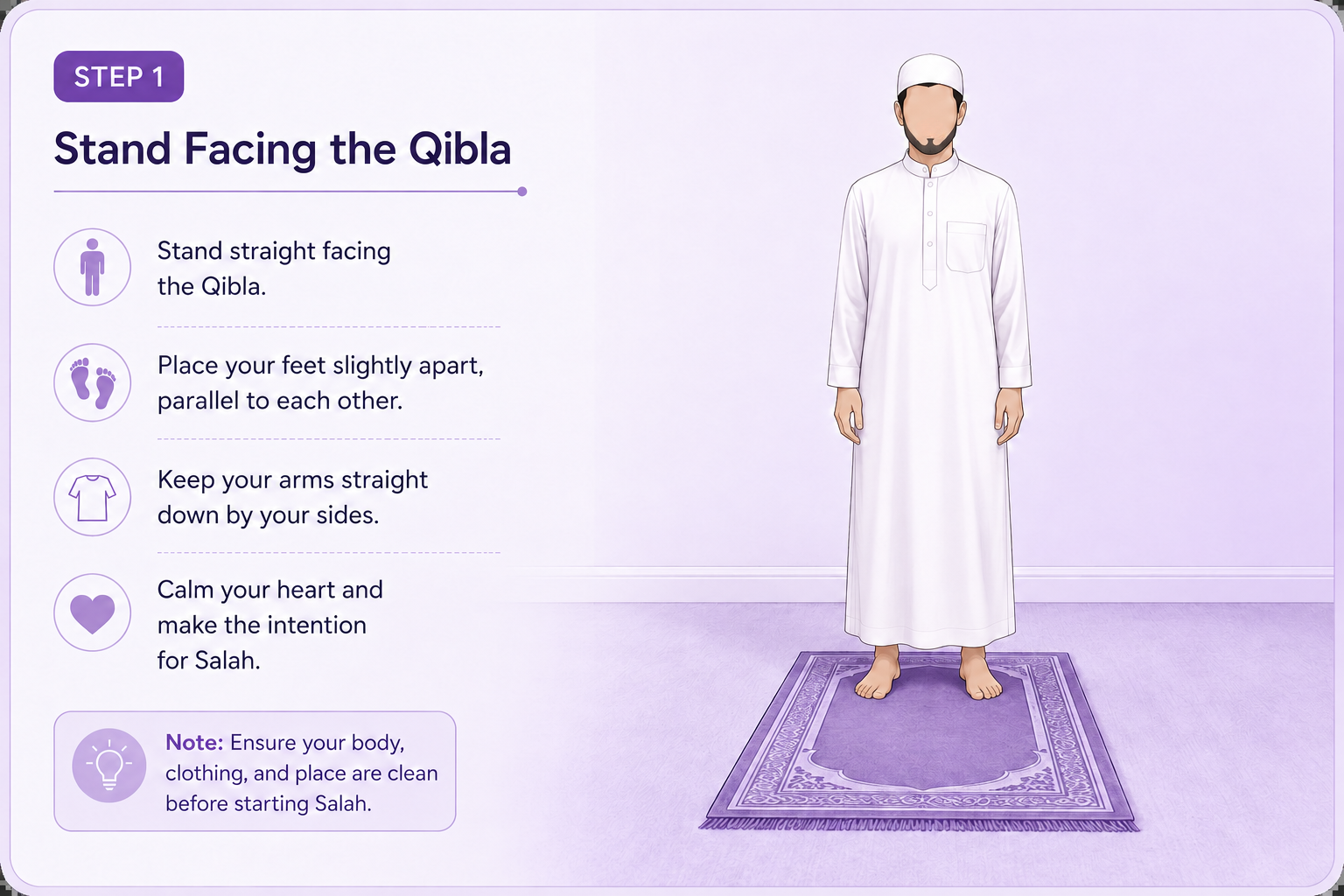
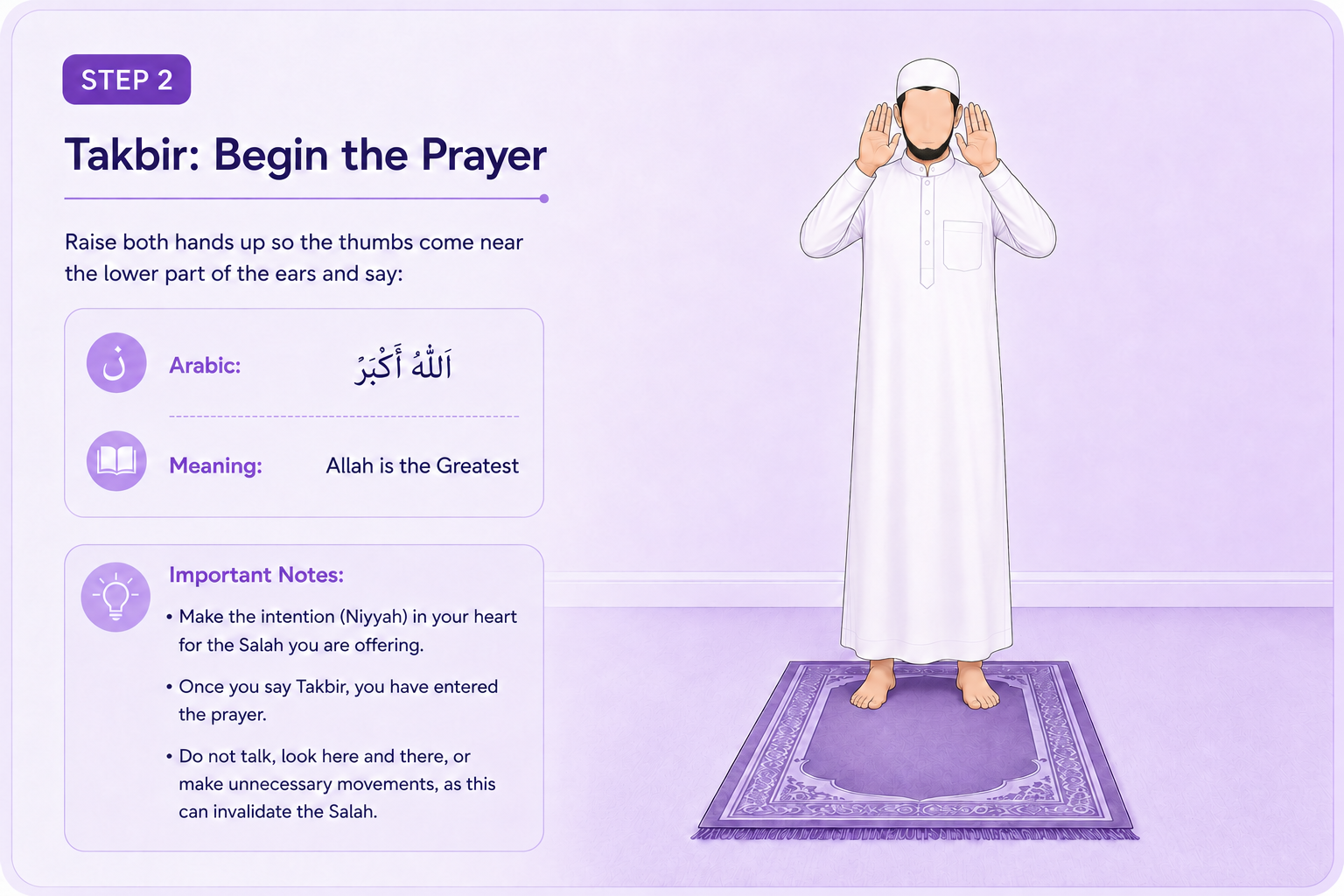
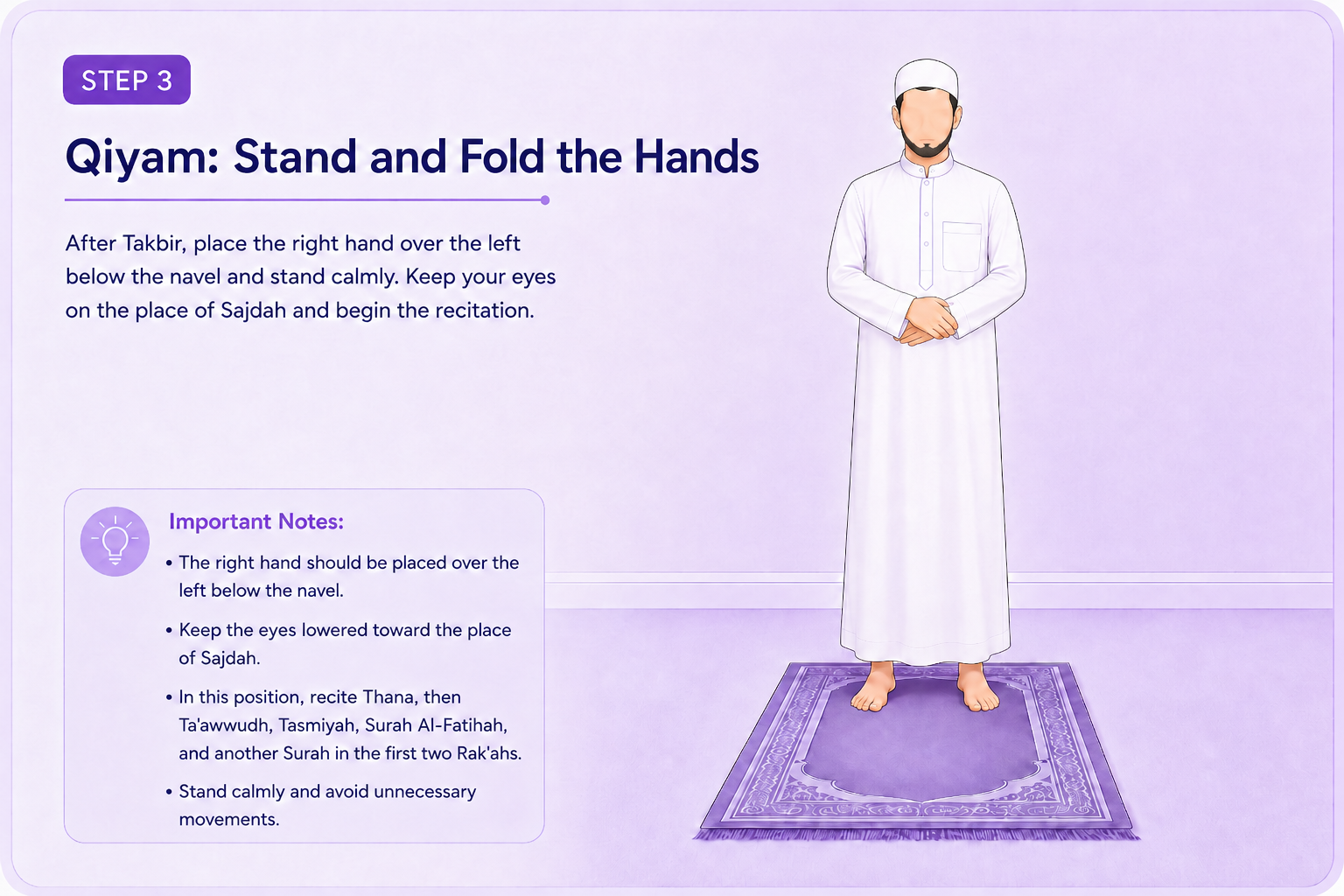
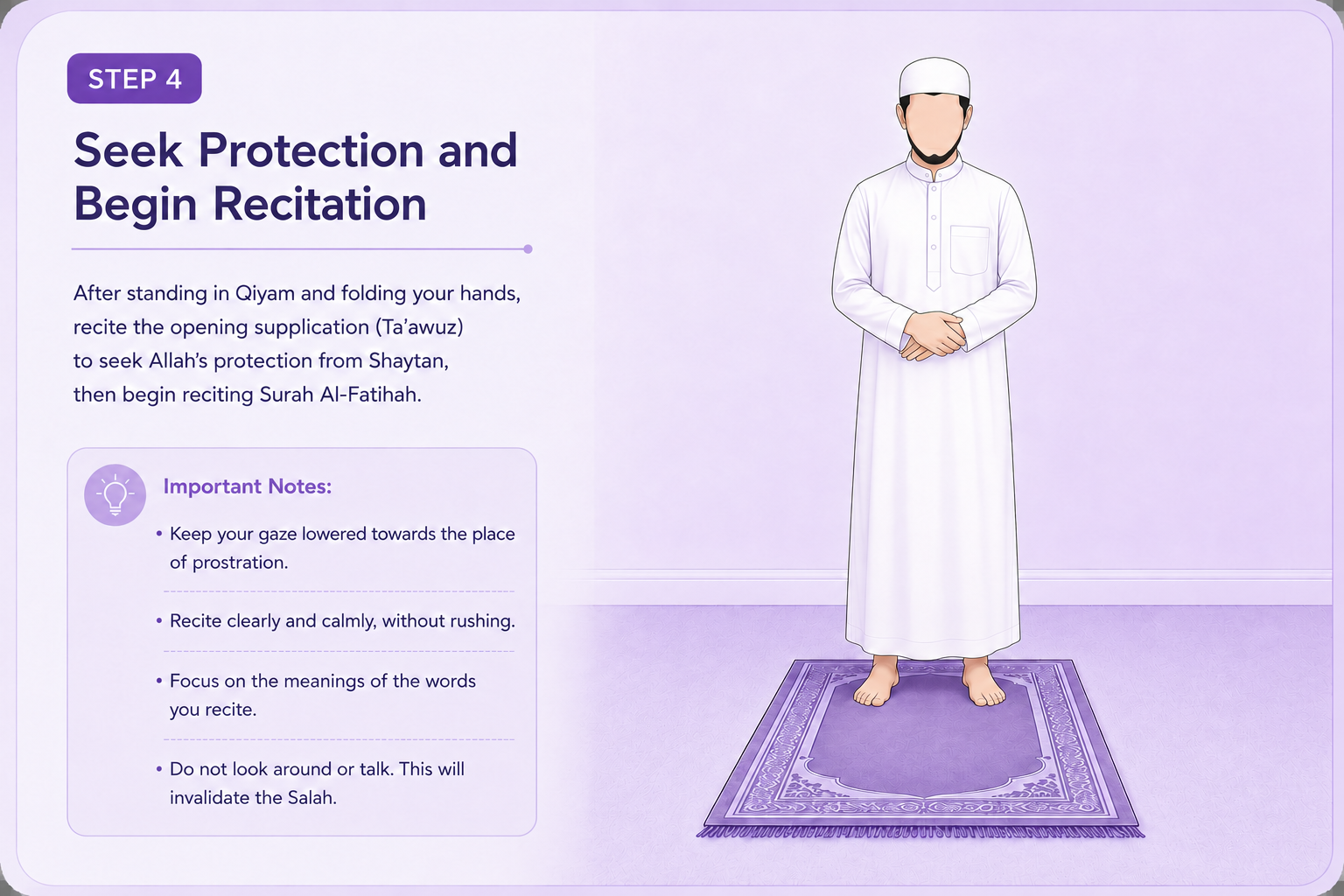
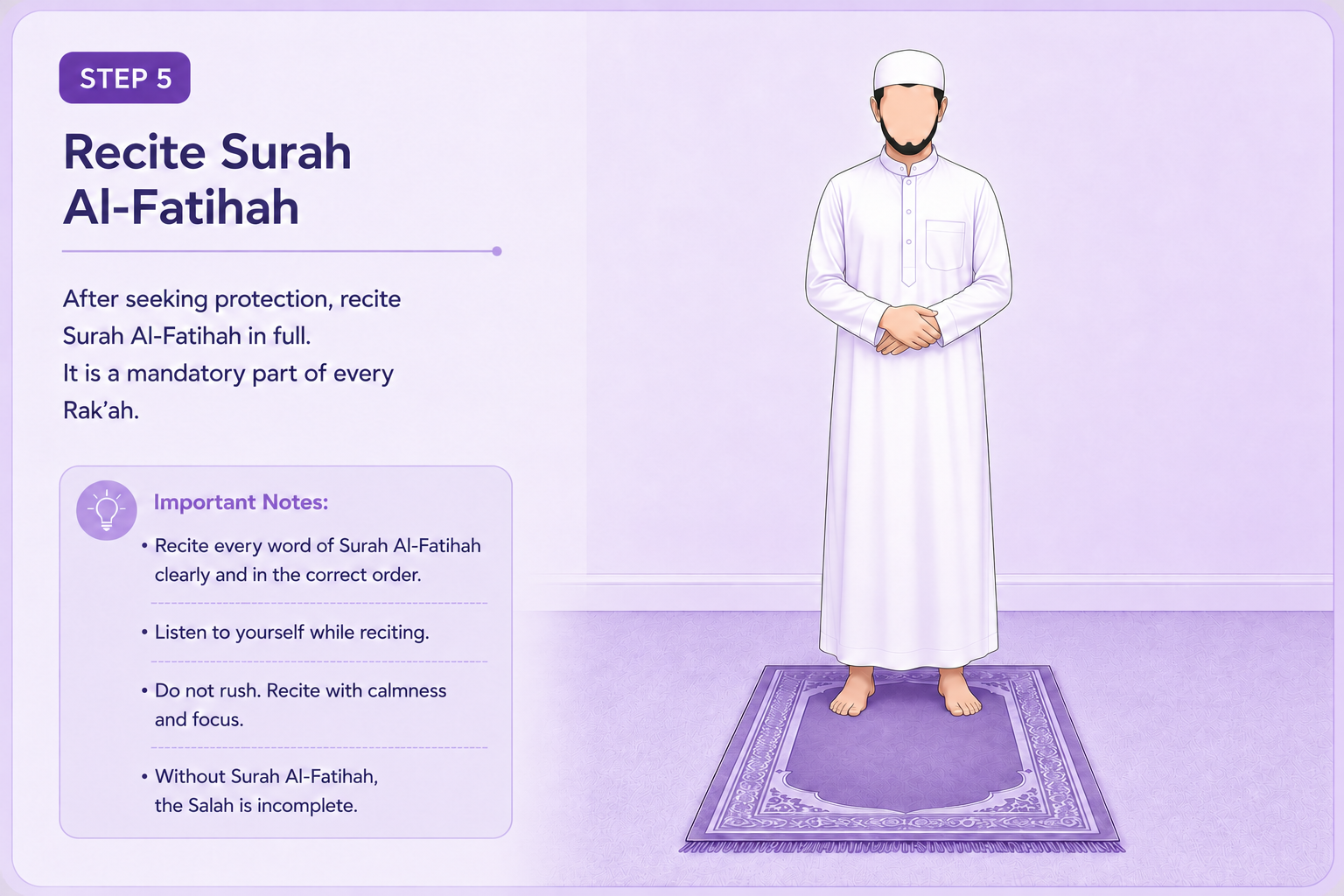
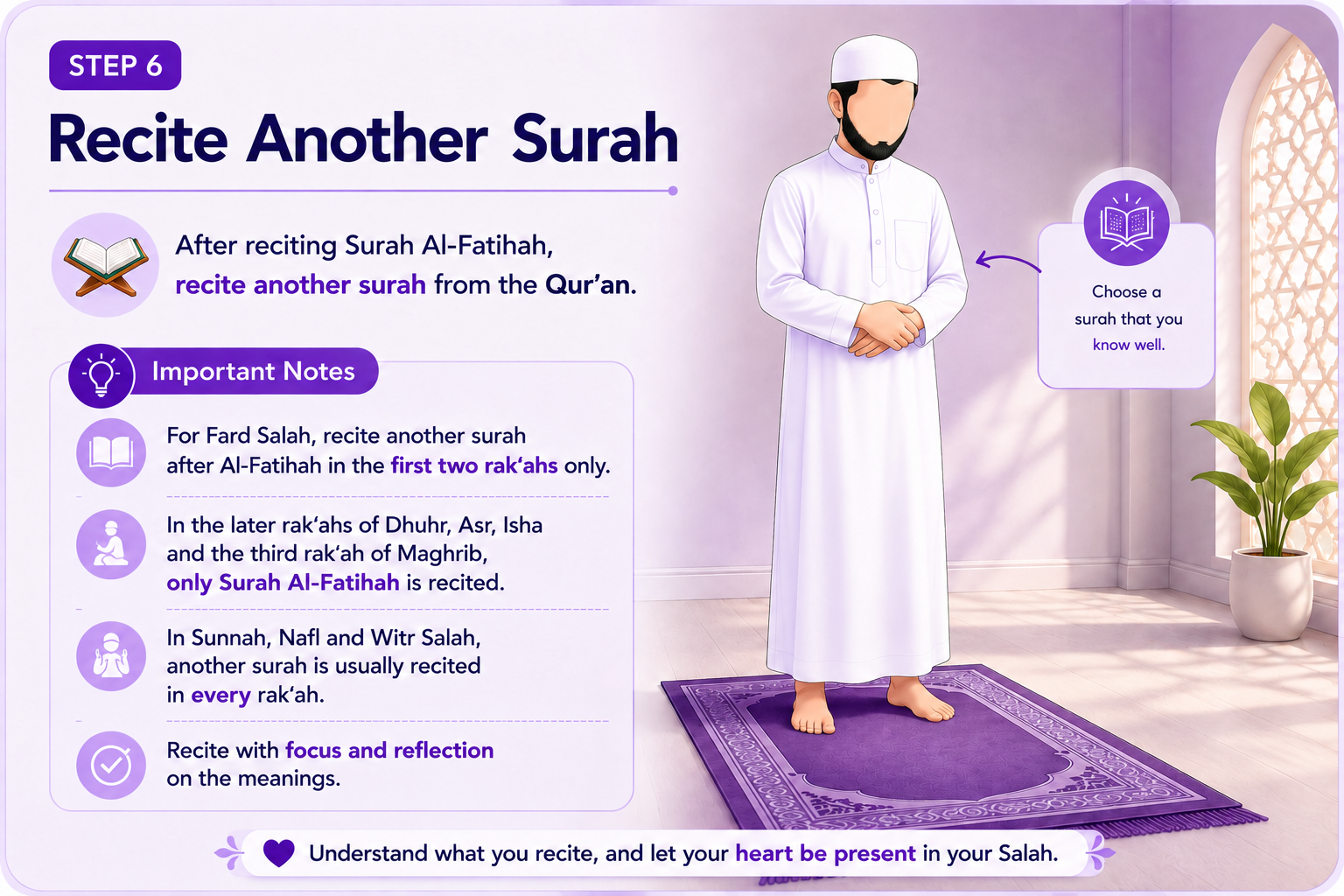
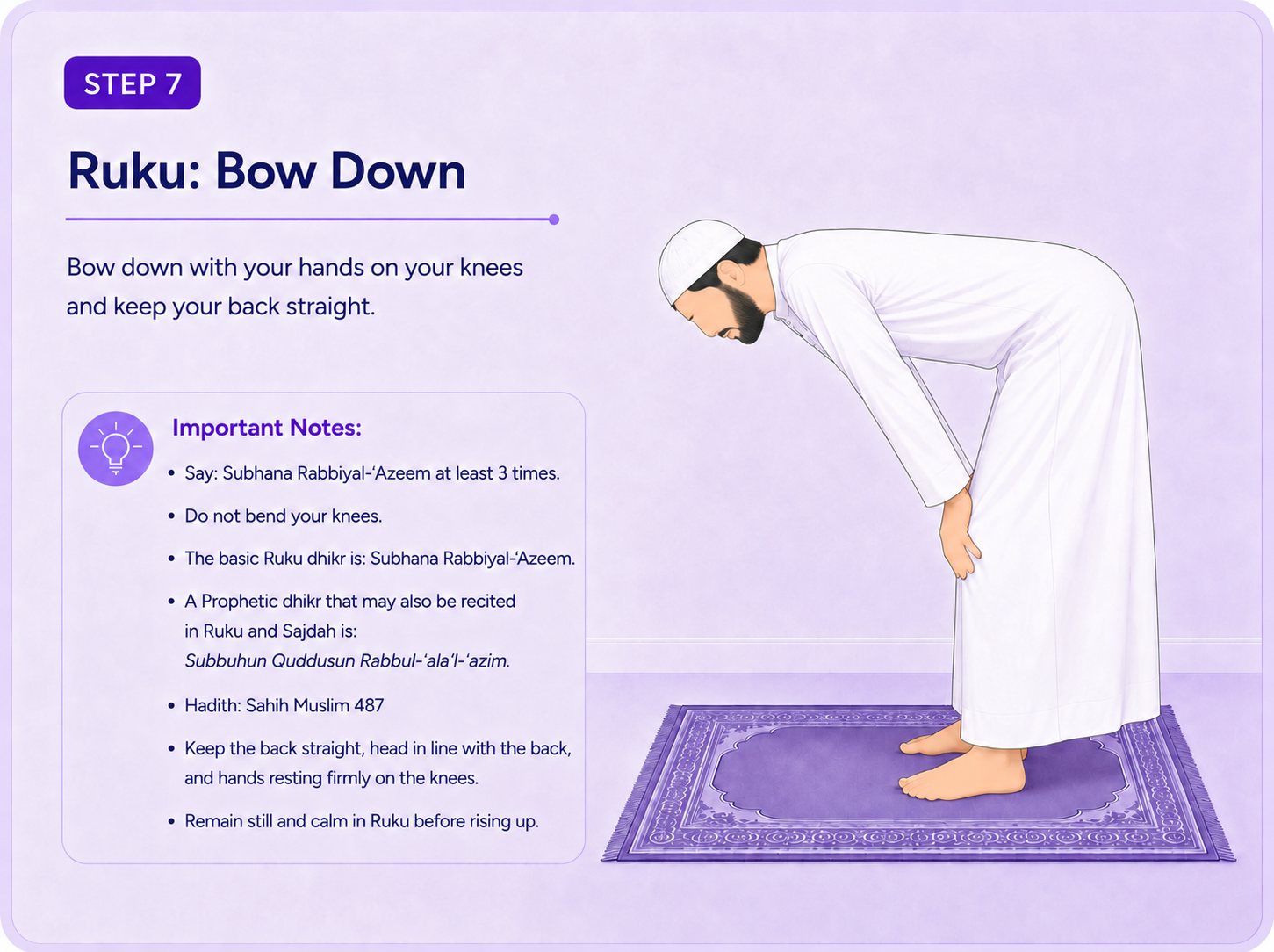
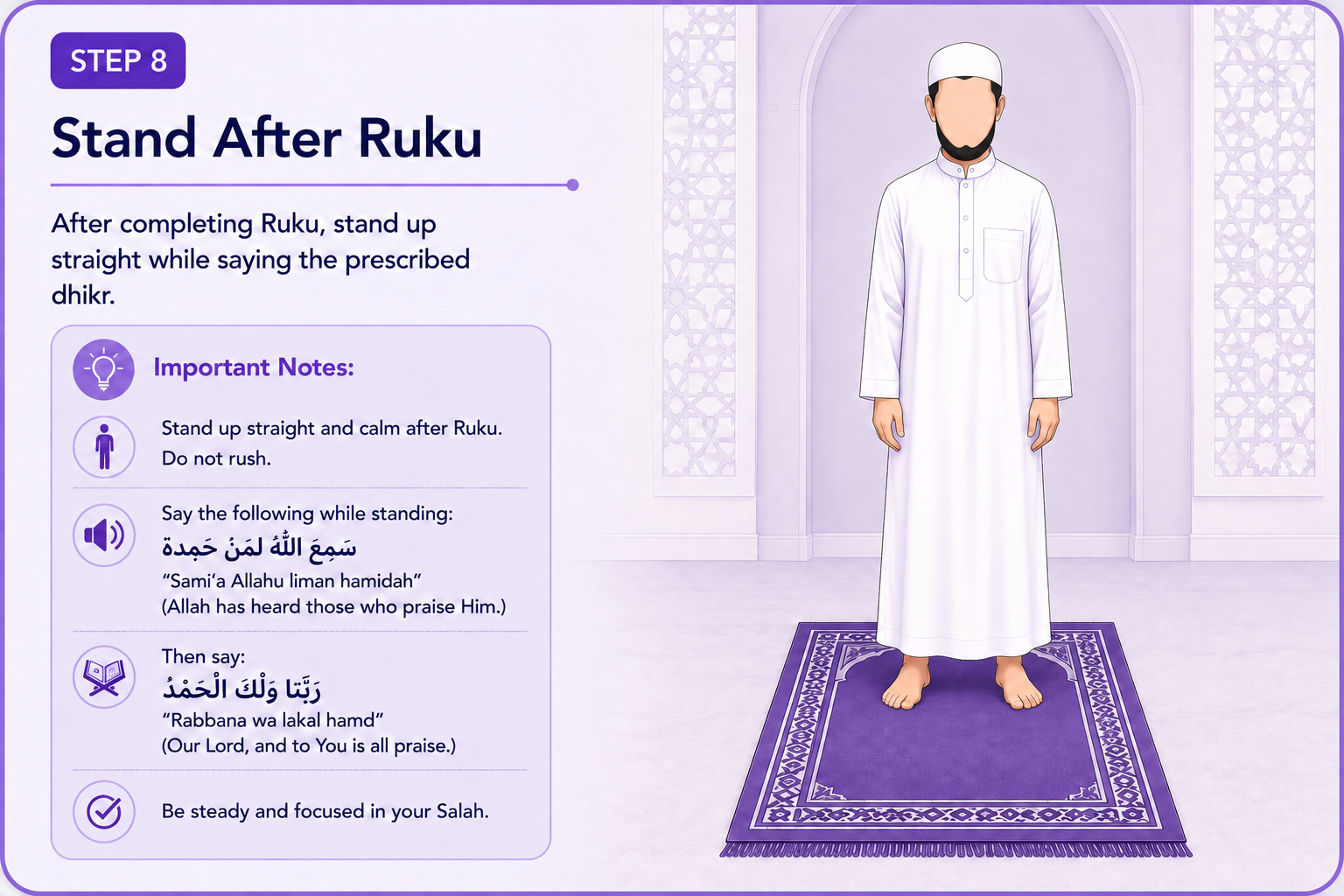
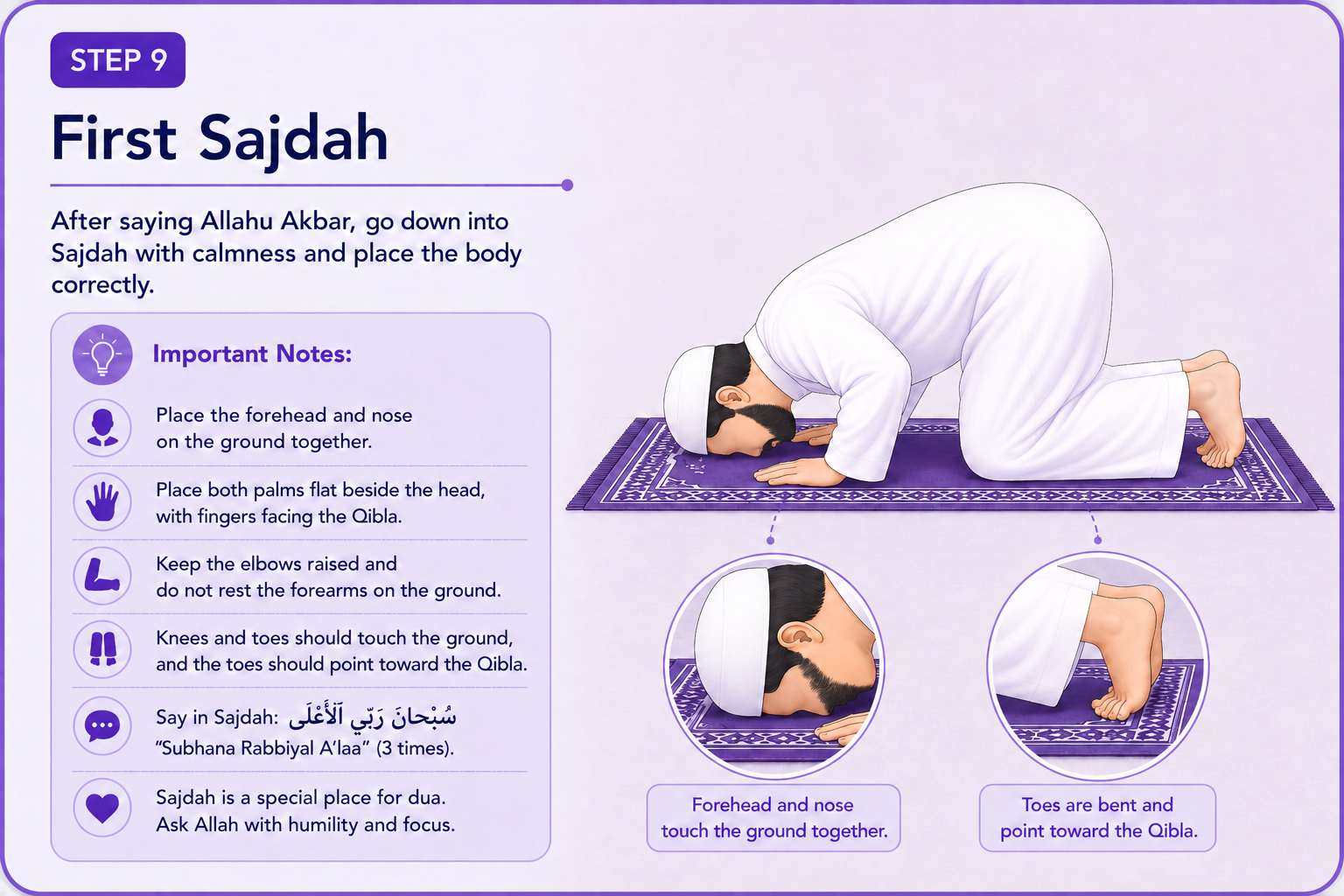
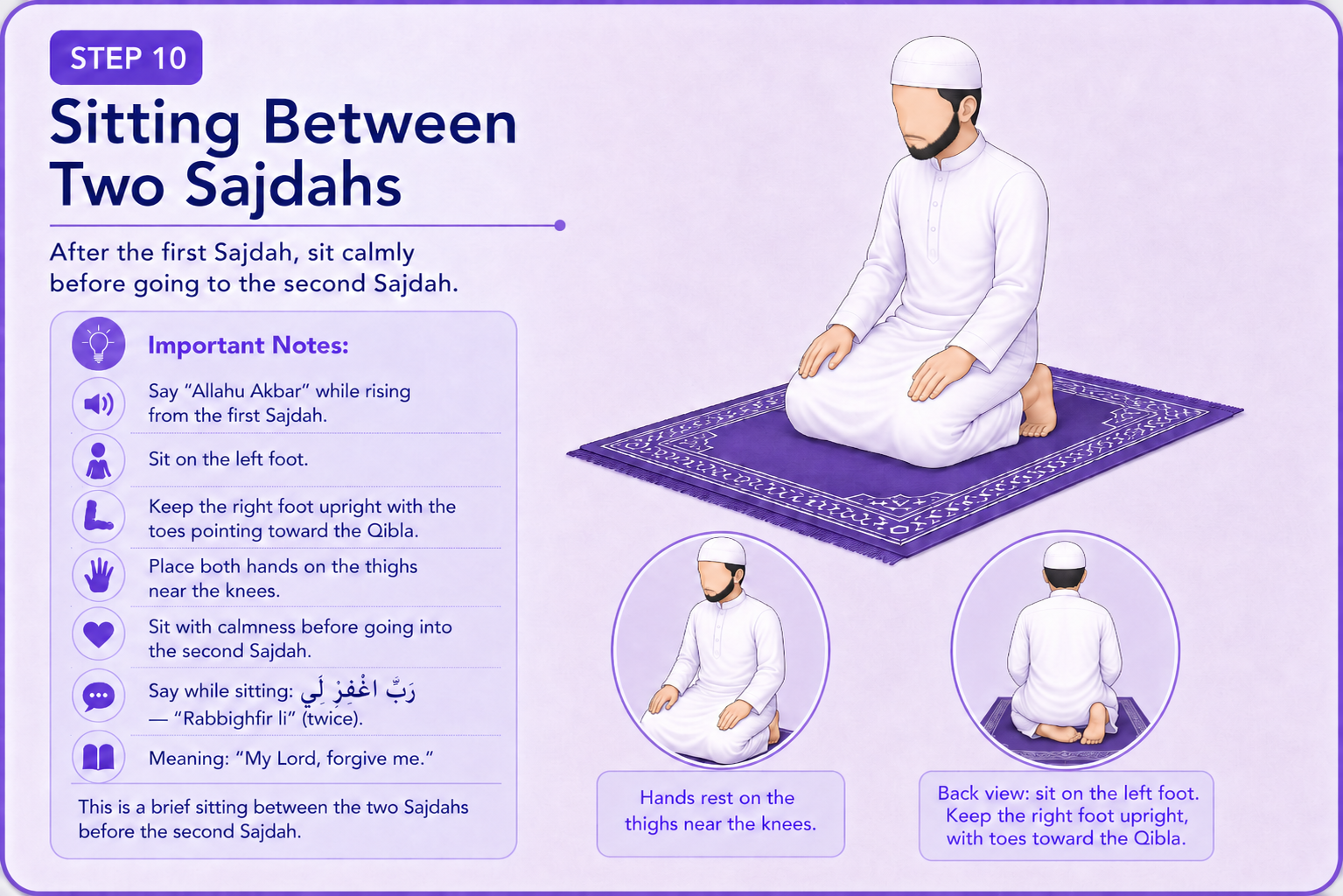
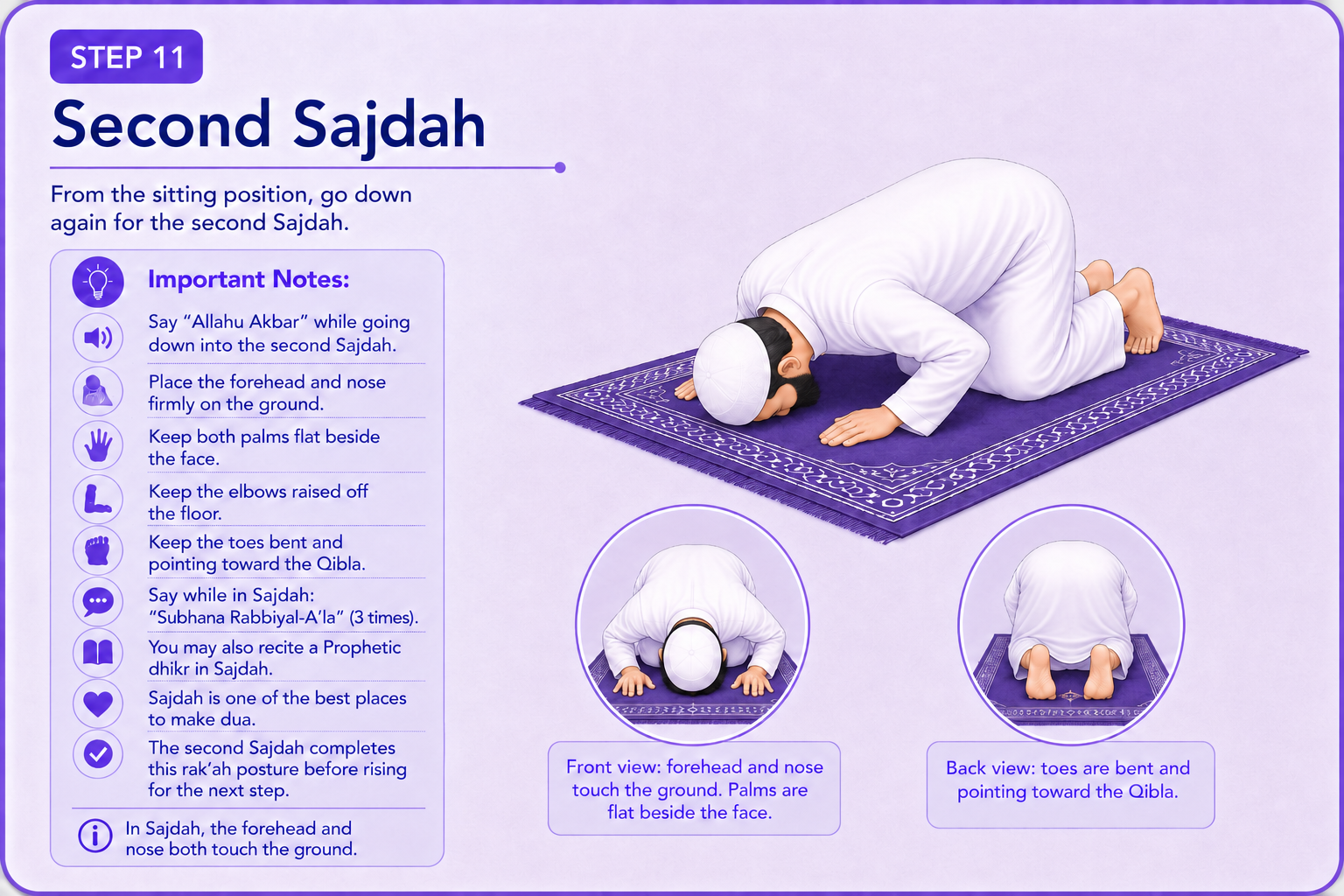
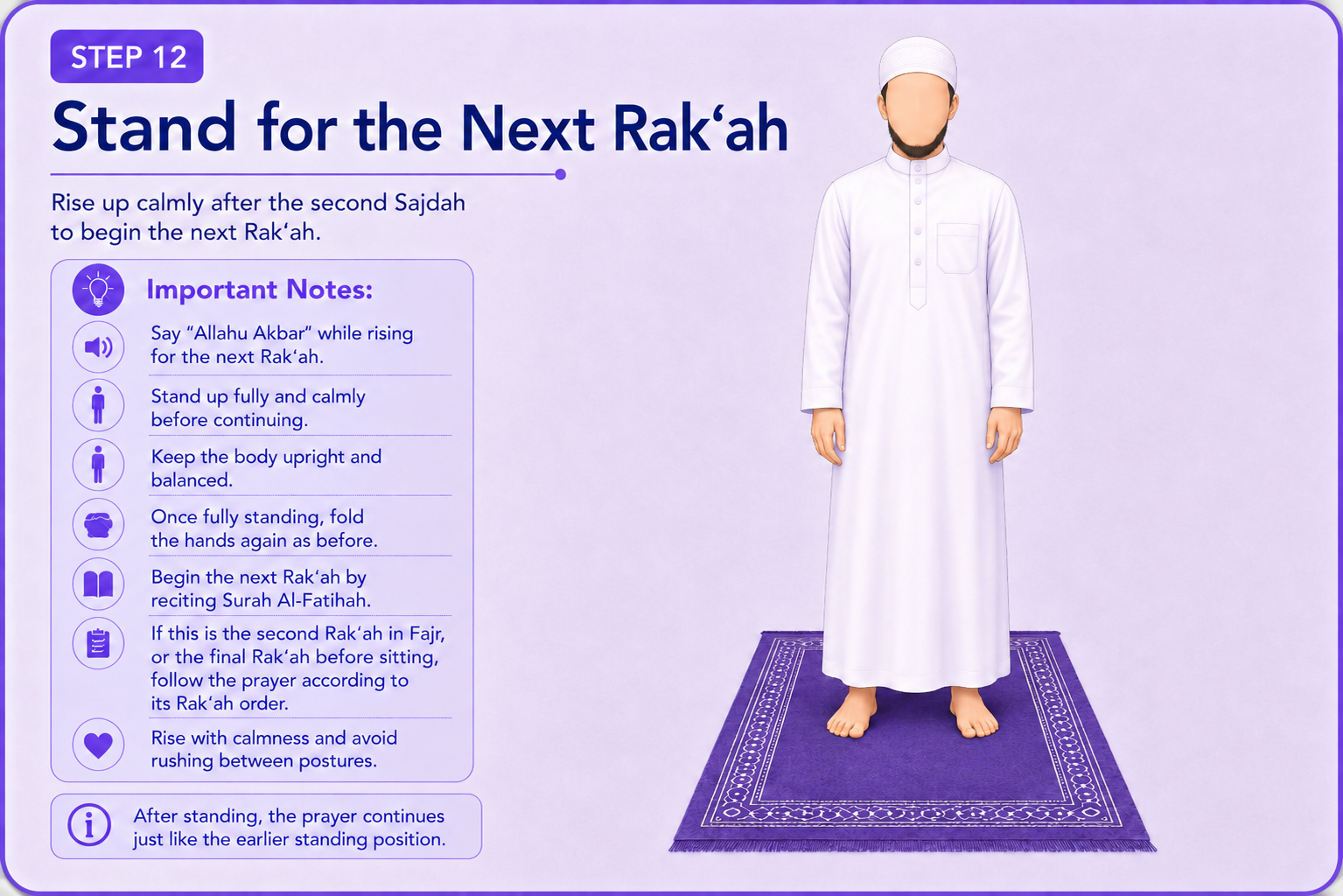
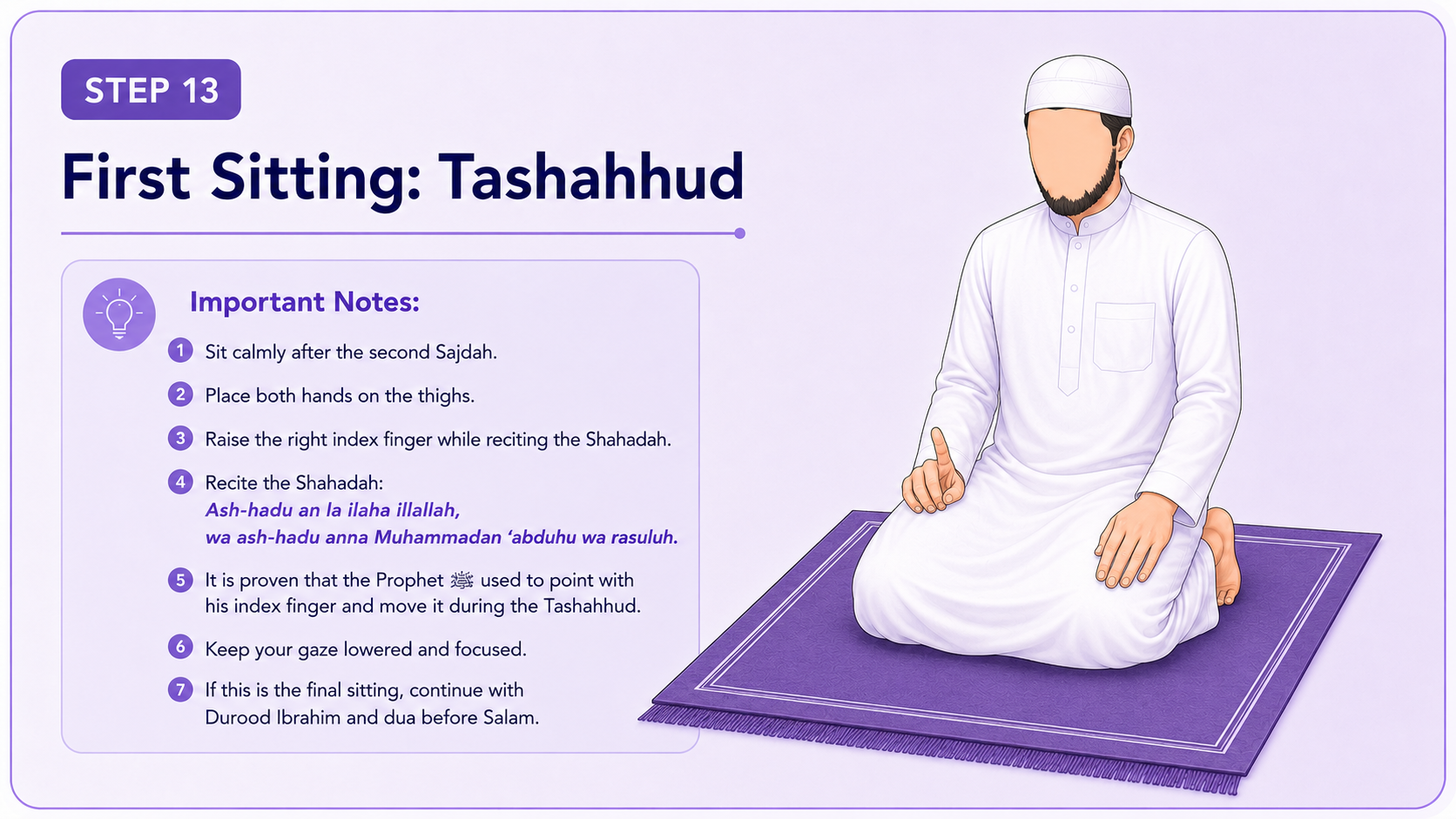
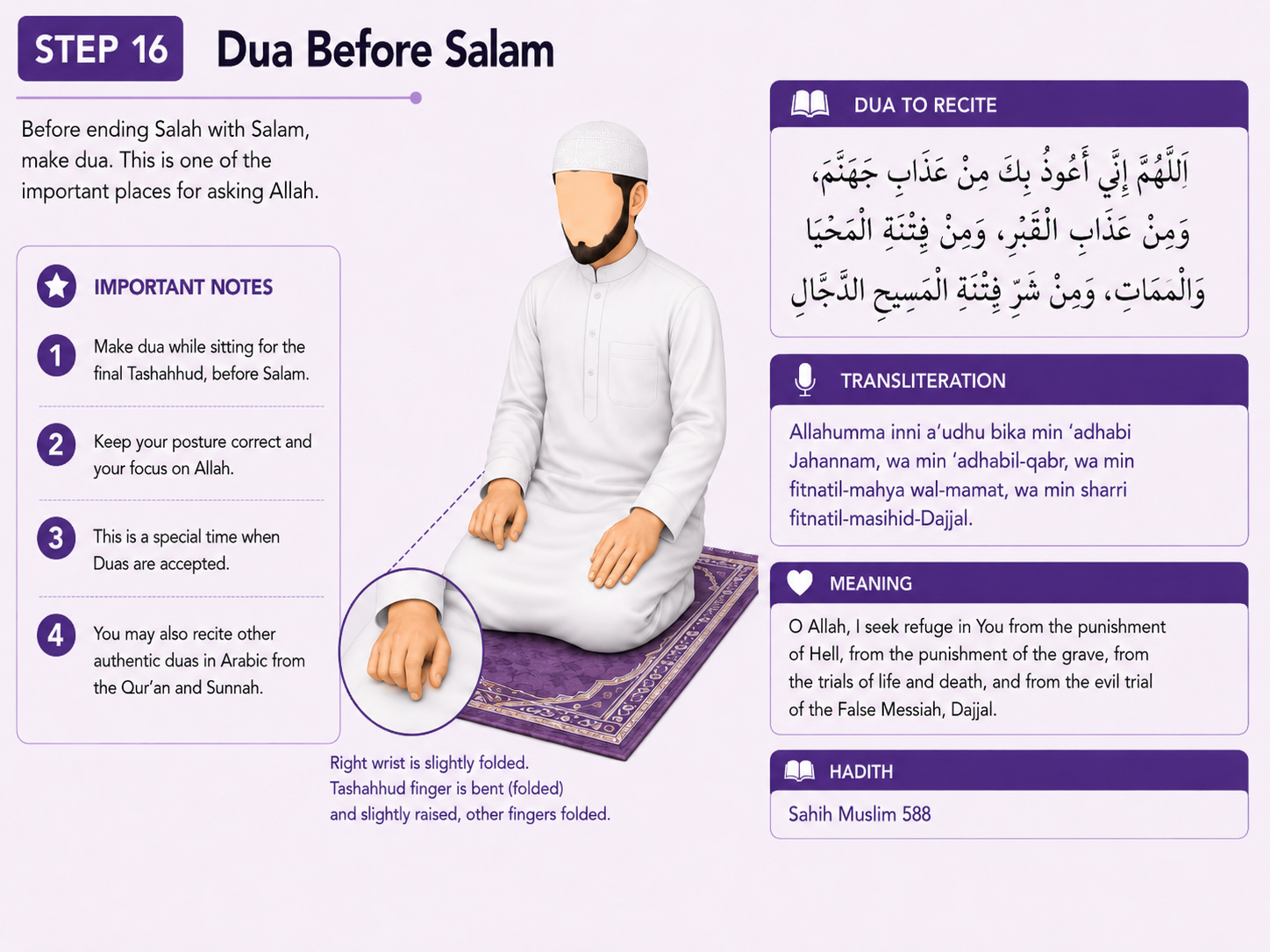
Salah includes moments where a person can ask Allah with humility and hope.
The Prophet ﷺ said that the closest a servant is to his Lord is while prostrating, so one should make plenty of dua in Sajdah.
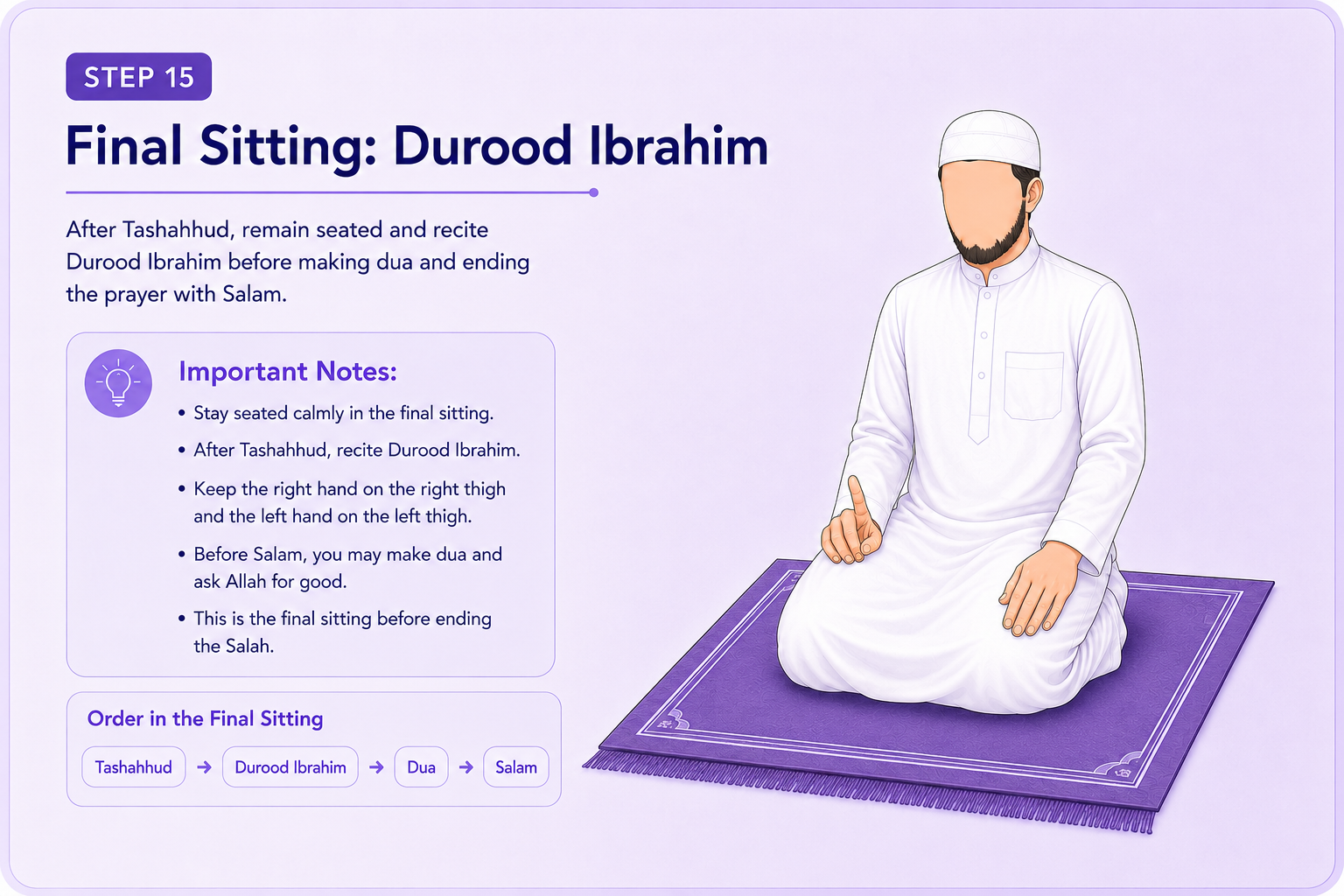
Hadith: Sahih Muslim 482After Tashahhud and Durood Ibrahim, before ending Salah with Salam, a person may make dua and ask Allah for good.
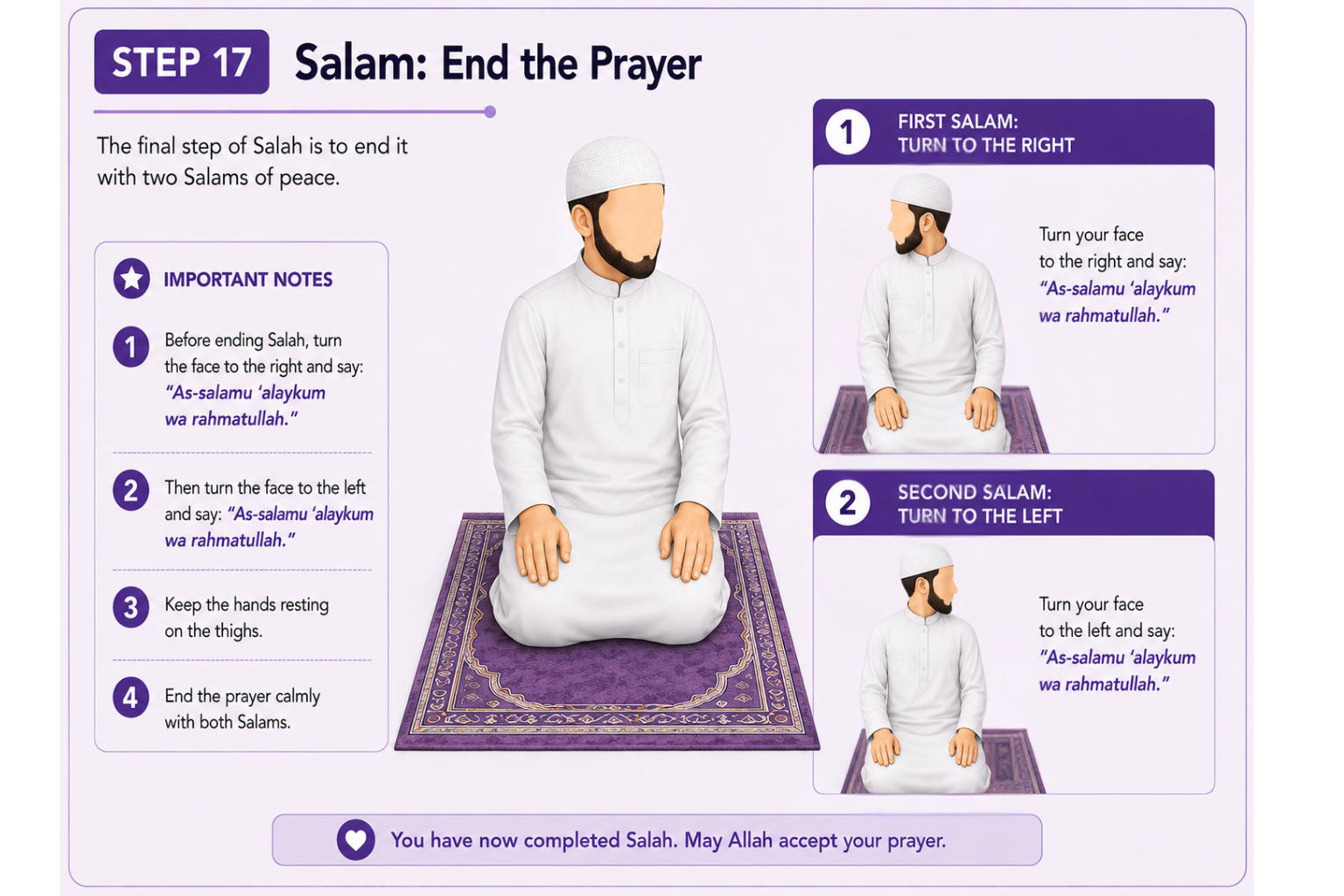
Hadith: Sahih al-Bukhari 835; Sahih Muslim 589Pray two full rak‘ahs. After the second rak‘ah, sit for Tashahhud, recite Durood Ibrahim and dua, then end with Salam.
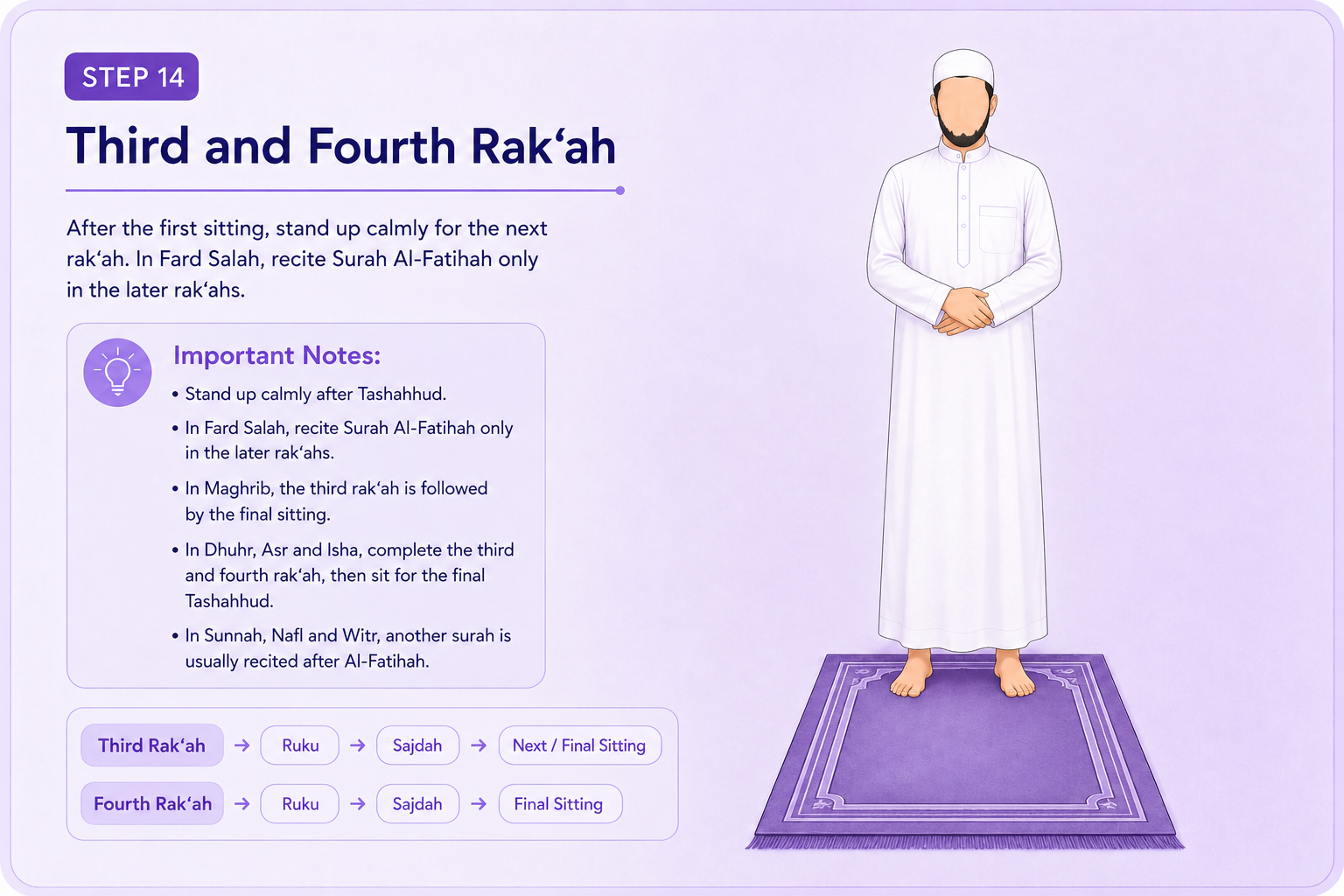
Pray two rak‘ahs and sit for Tashahhud. Then stand for the third rak‘ah. After the third rak‘ah, sit for the final sitting and end with Salam.
Pray two rak‘ahs and sit for Tashahhud. Then stand and complete the third and fourth rak‘ahs. After the fourth rak‘ah, sit for the final sitting and end with Salam.
Pause calmly and act according to what you are more sure of. If unsure often, learn the rules of Sajdah Sahw separately from a reliable teacher.