This helps the homepage show the Hijri date according to your local date. Hijri dates may still vary by local moon sighting.
Before Salah / Namaz
How to Make Wudu
Wudu is purification before Salah. This guide shows each step through clear images, then explains the Qur’an verse, the dua after Wudu, and the virtues mentioned in authentic hadith.
What is Wudu?
Wudu is washing specific parts of the body before Salah. It prepares a person to stand for prayer in a state of purification.
When is Wudu needed?
Wudu is needed before Salah when a person is not already in a state of Wudu. If Wudu breaks, it must be made again before praying.
Step-by-Step Guide to Perform Wudu
This guide is for both men and women. Follow each step in order to learn how Wudu is performed before Salah.
Step 1
Niyyah (Intention)
Make intention in your heart before beginning Wudu.
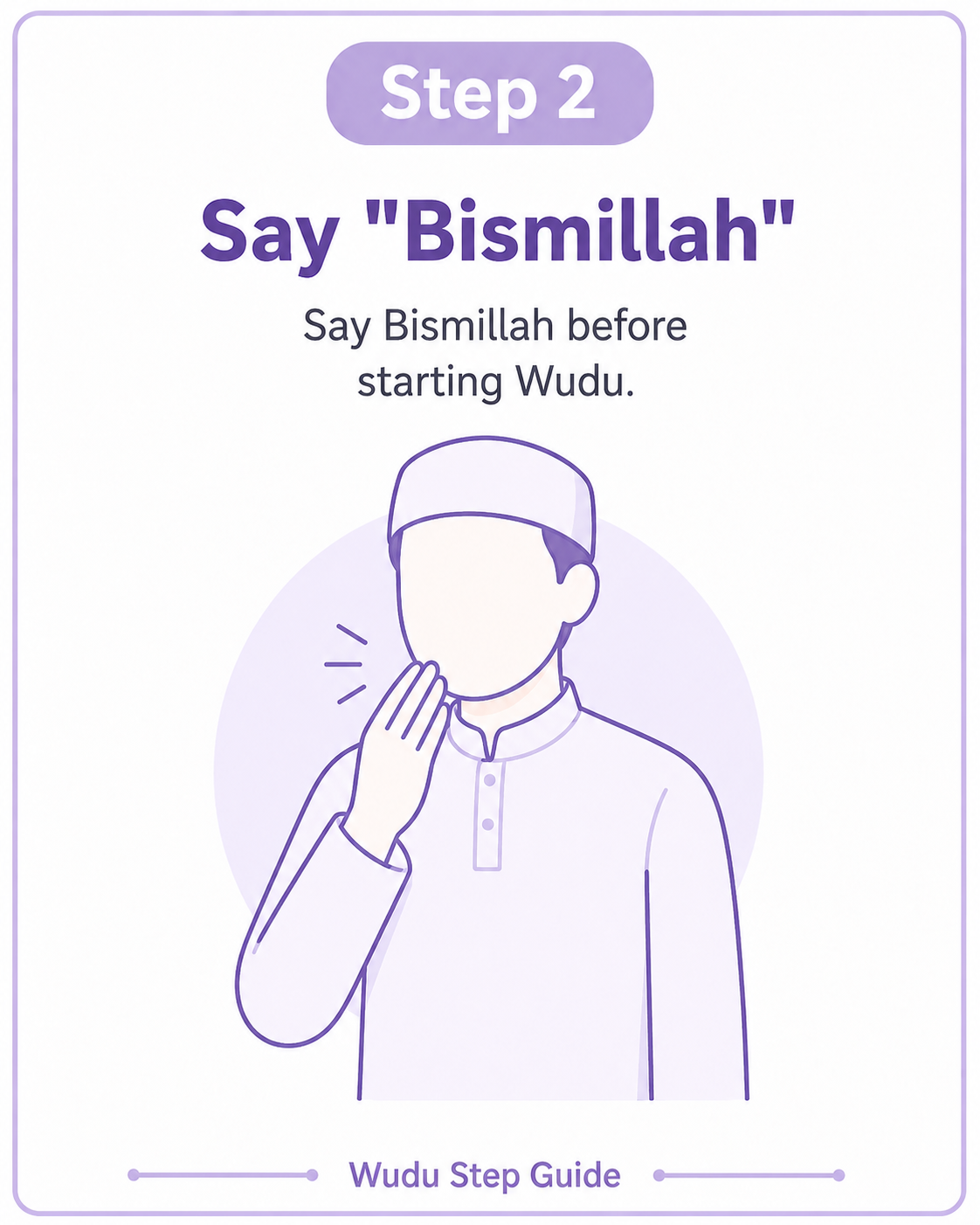
Step 2
Say Bismillah
Say Bismillah before starting Wudu.
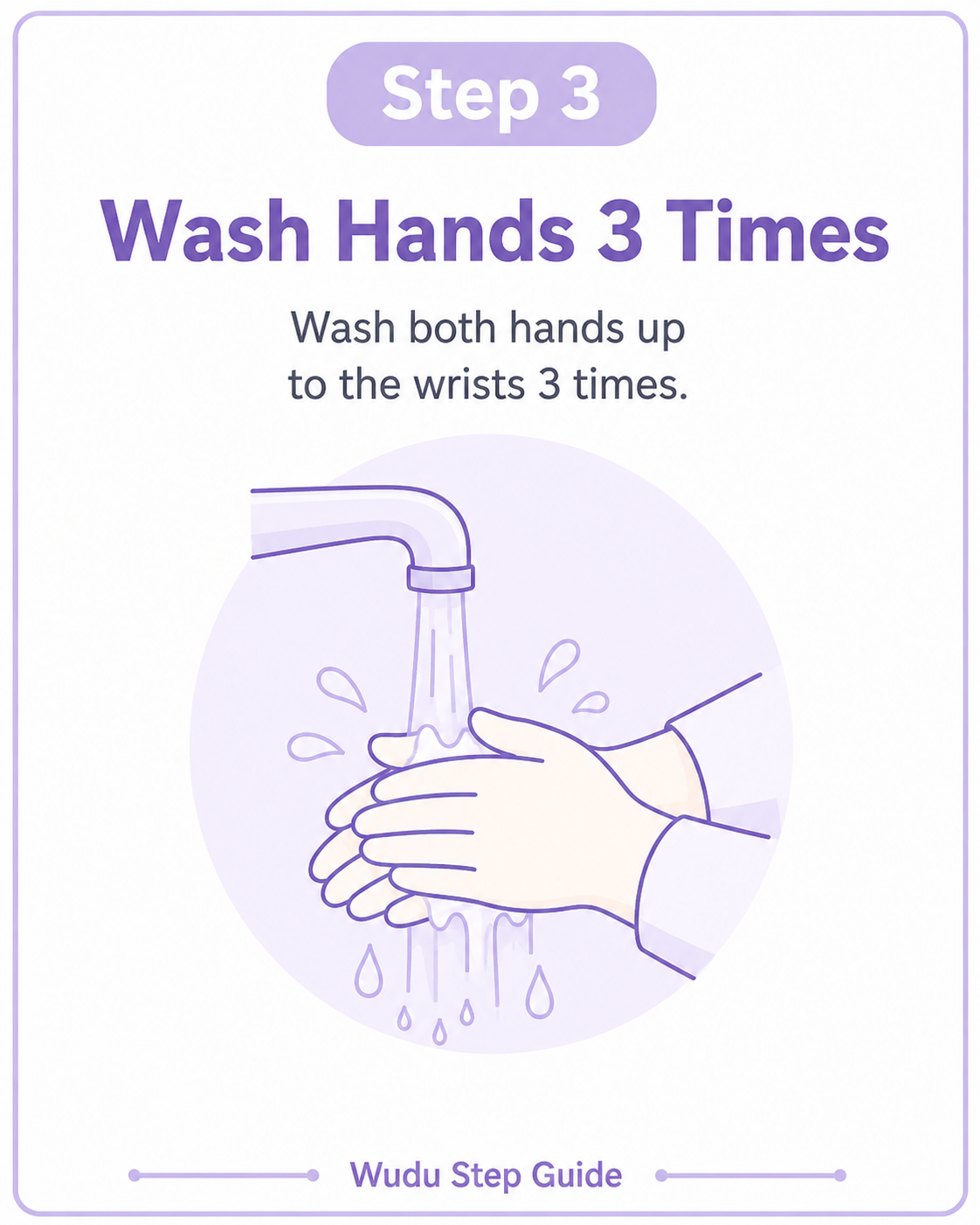
Step 3
Wash Hands 3 Times
Wash both hands up to the wrists 3 times.
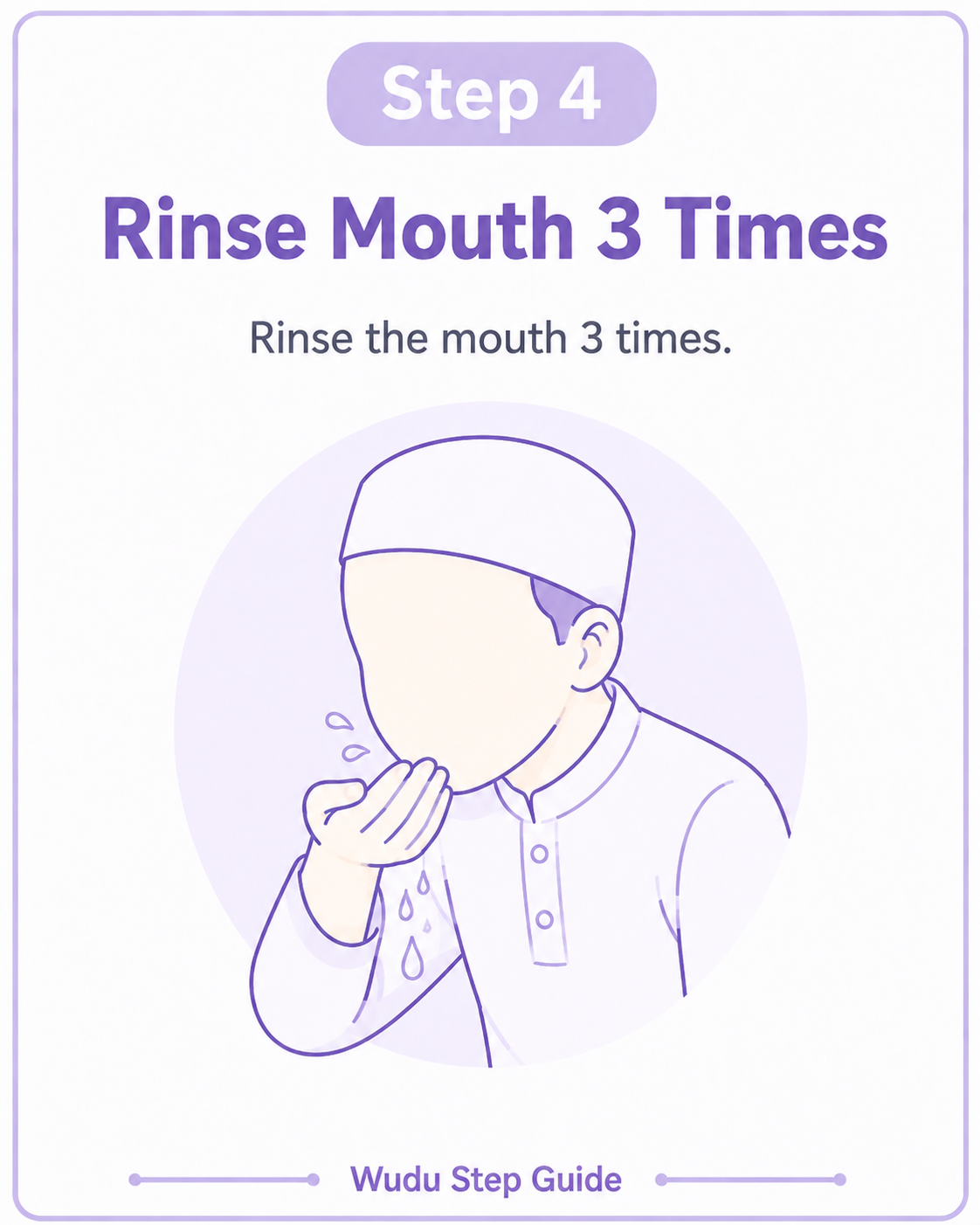
Step 4
Rinse Mouth 3 Times
Rinse the mouth 3 times.
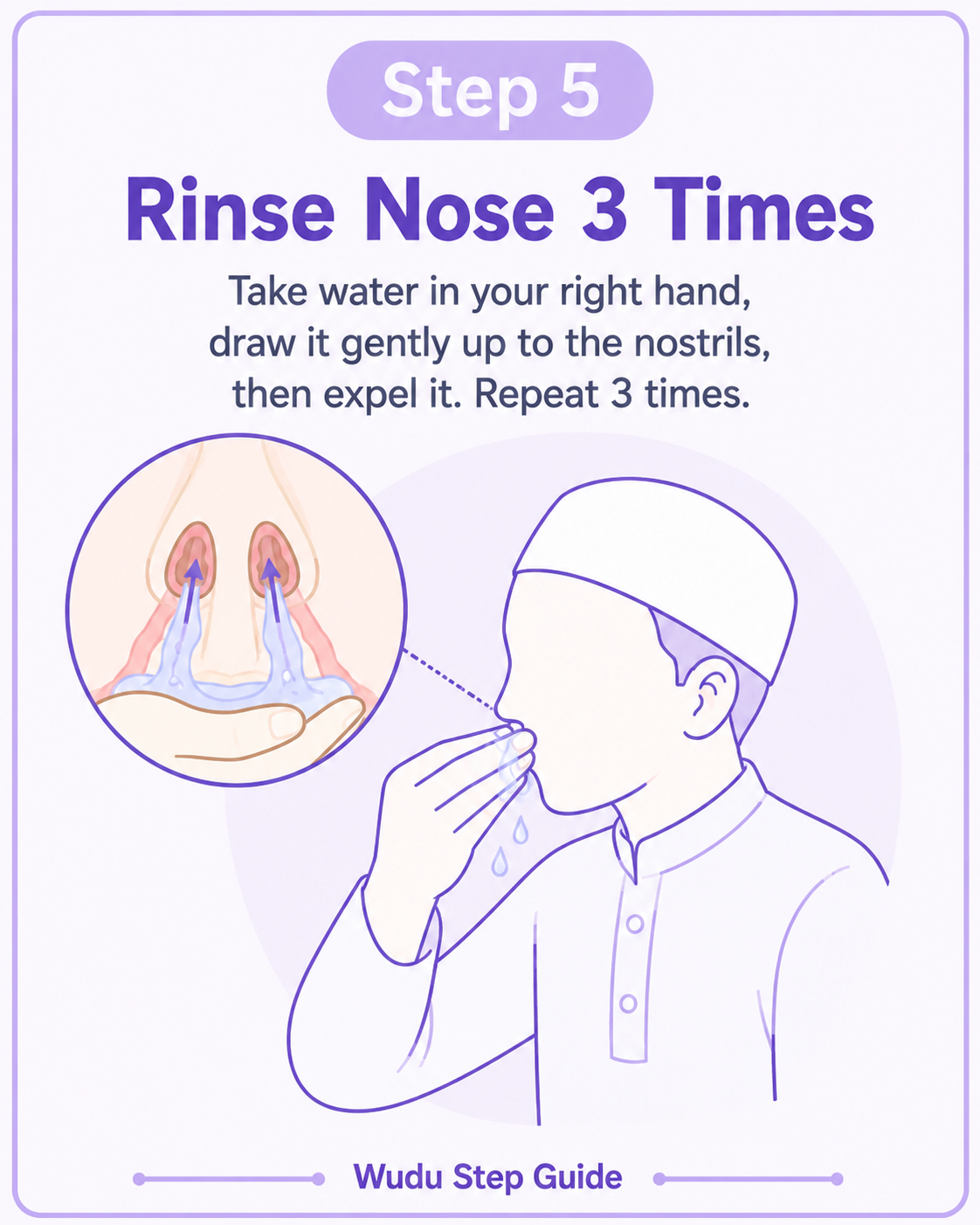
Step 5
Rinse Nose 3 Times
Take water in the right hand, draw it gently up to the nostrils, then expel it. Repeat 3 times.
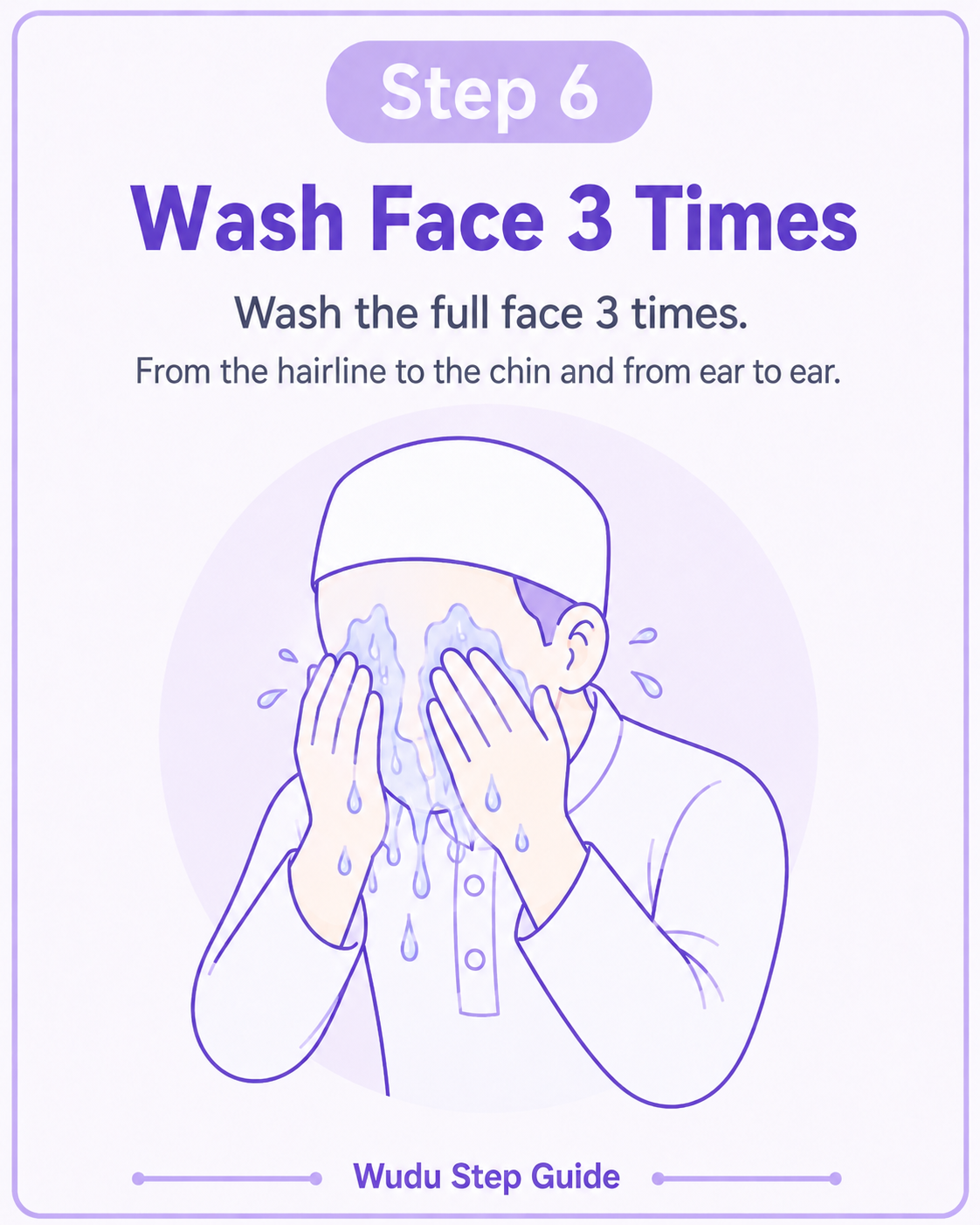
Step 6
Wash Face 3 Times
Wash the full face 3 times, from the hairline to the chin and from ear to ear.
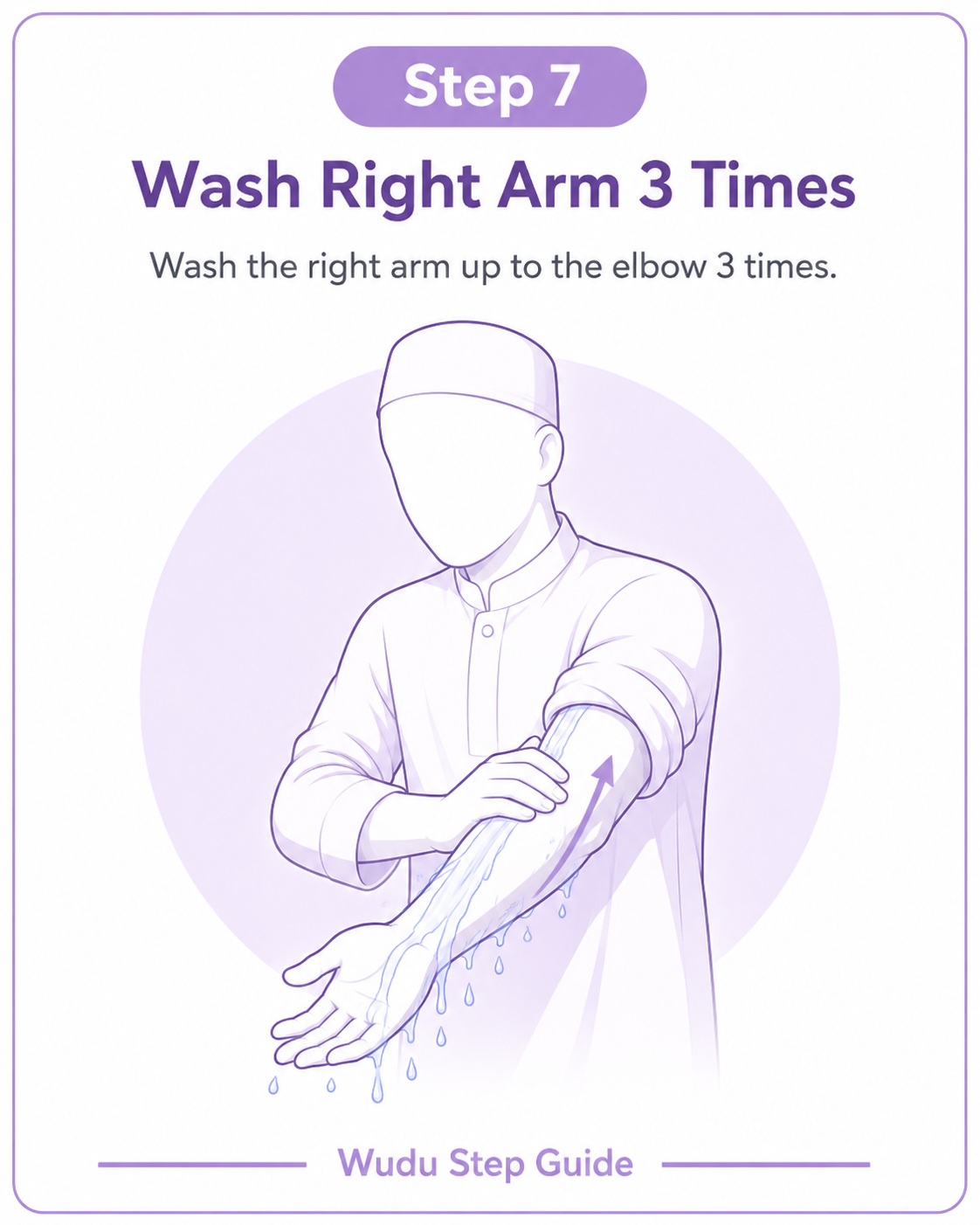
Step 7
Wash Right Arm 3 Times
Wash the right arm up to the elbow 3 times.
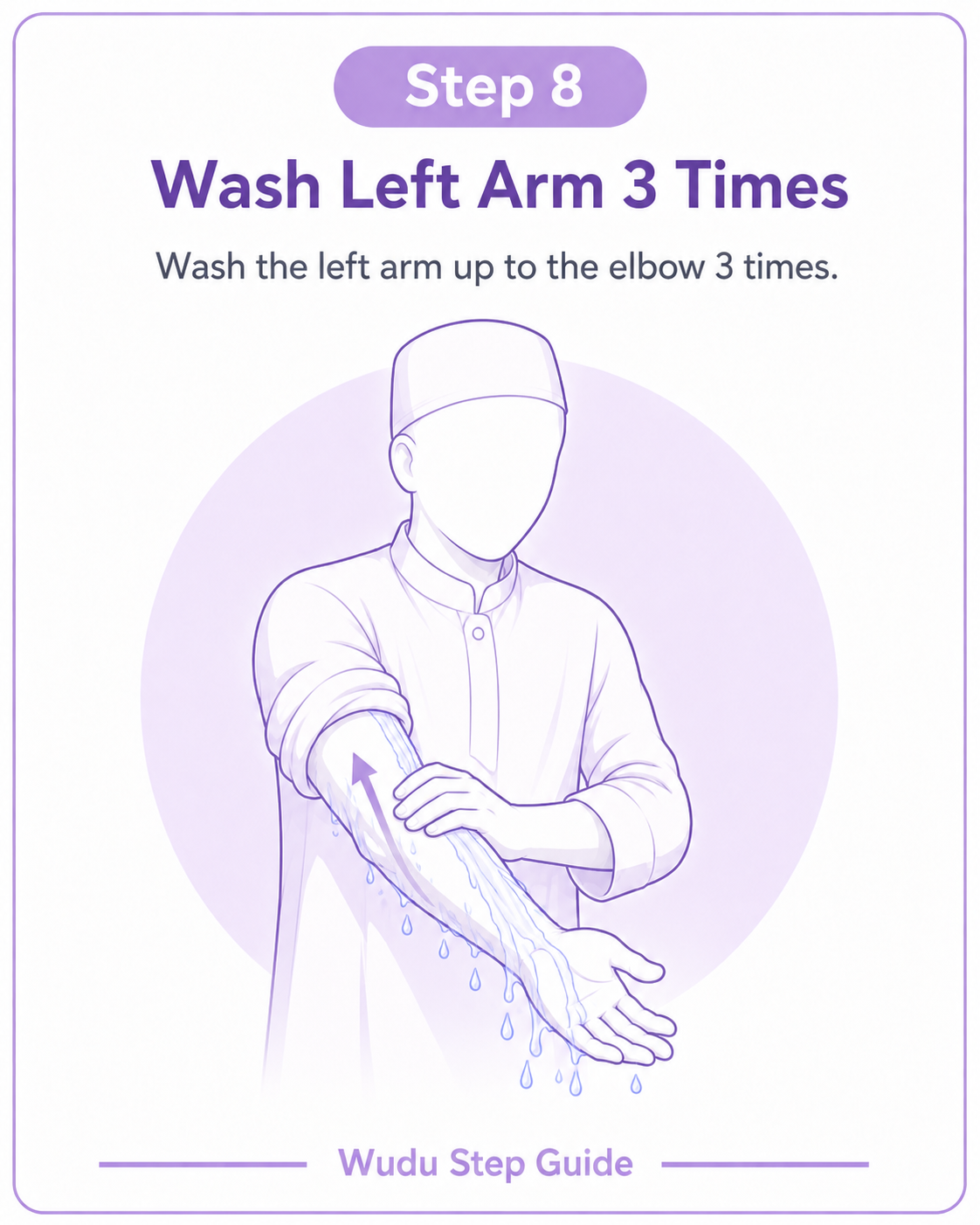
Step 8
Wash Left Arm 3 Times
Wash the left arm up to the elbow 3 times.
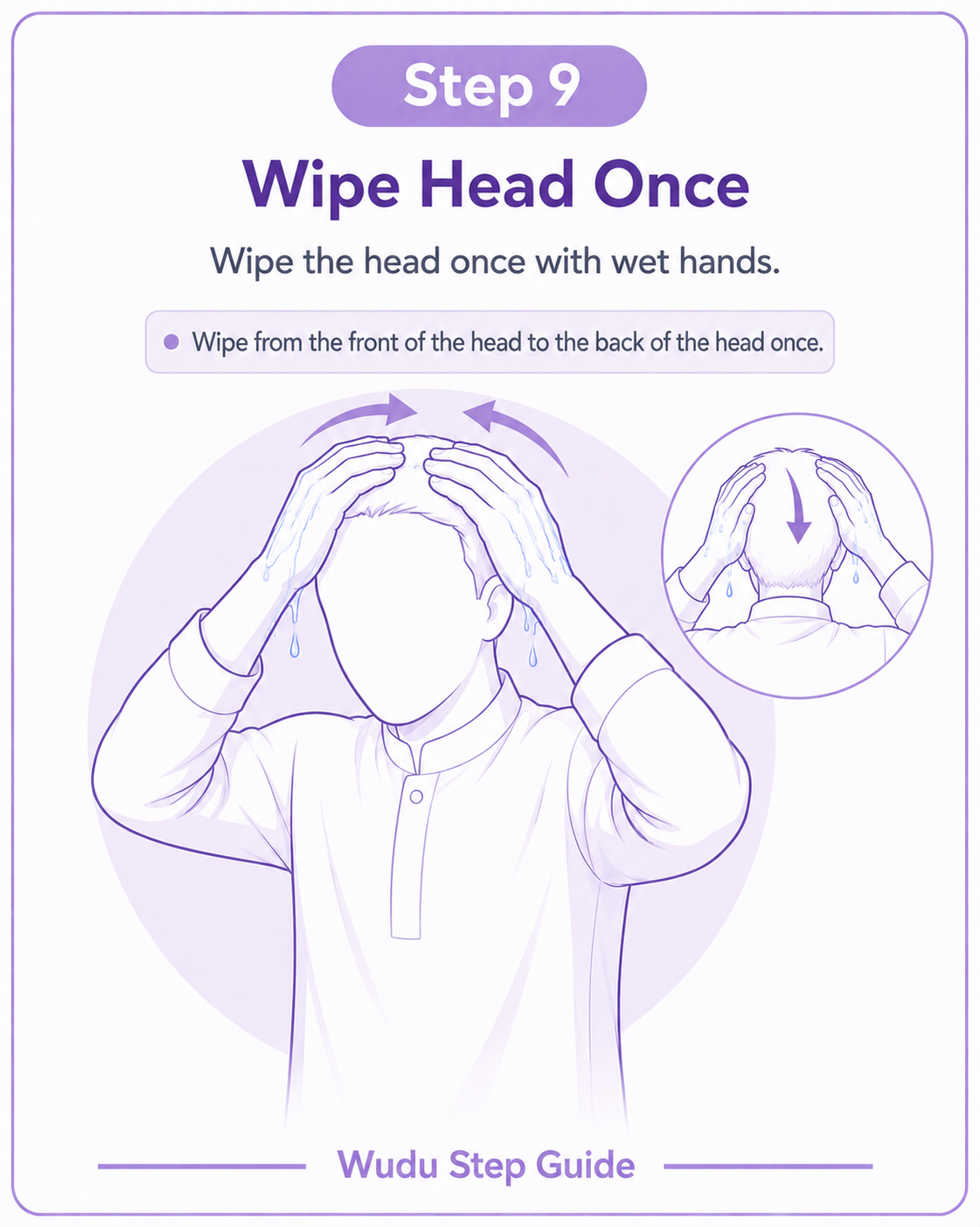
Step 9
Wipe Head Once
Wipe the head once with wet hands, from the front of the head to the back.
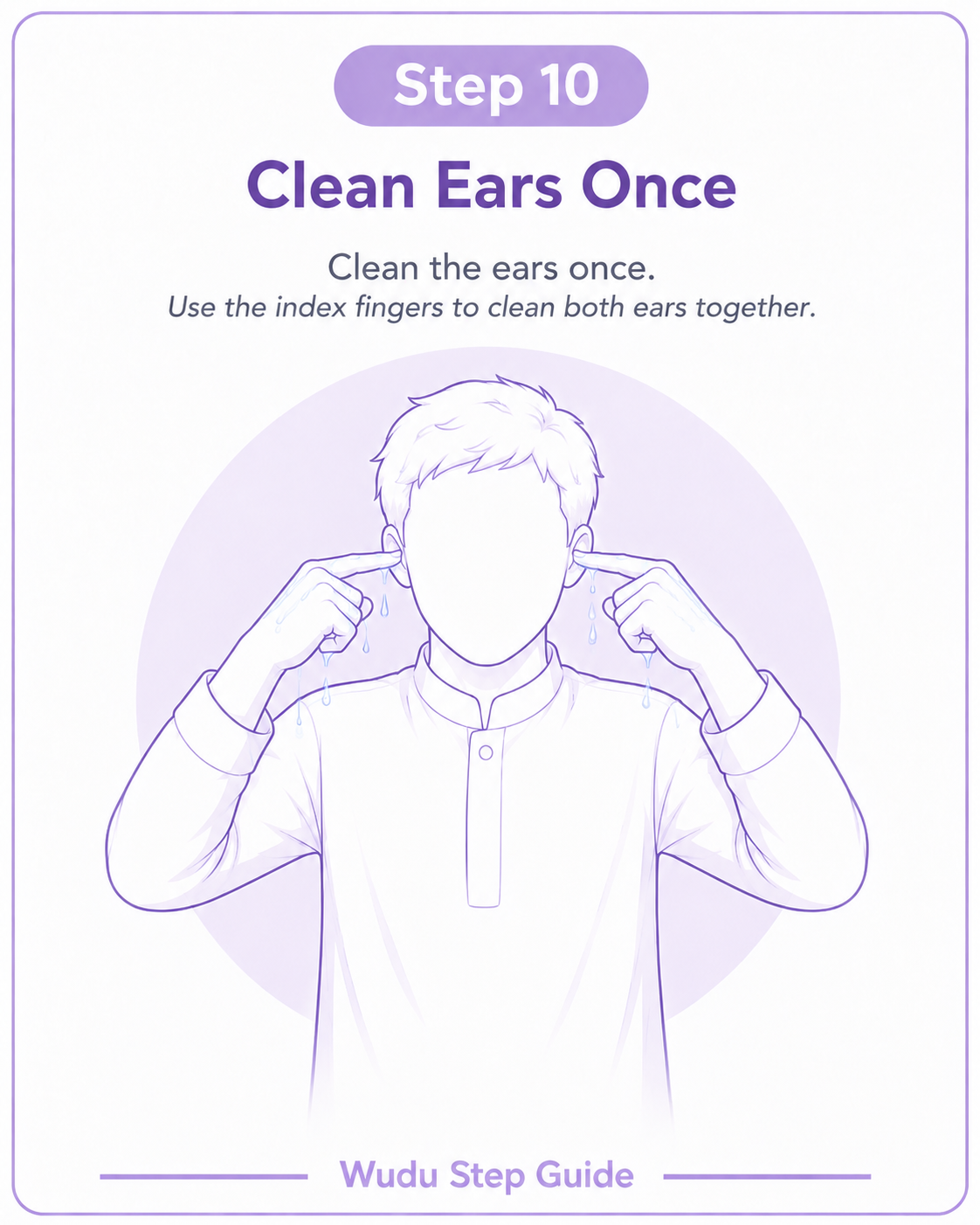
Step 10
Clean Ears Once
Clean both ears once with wet fingers.
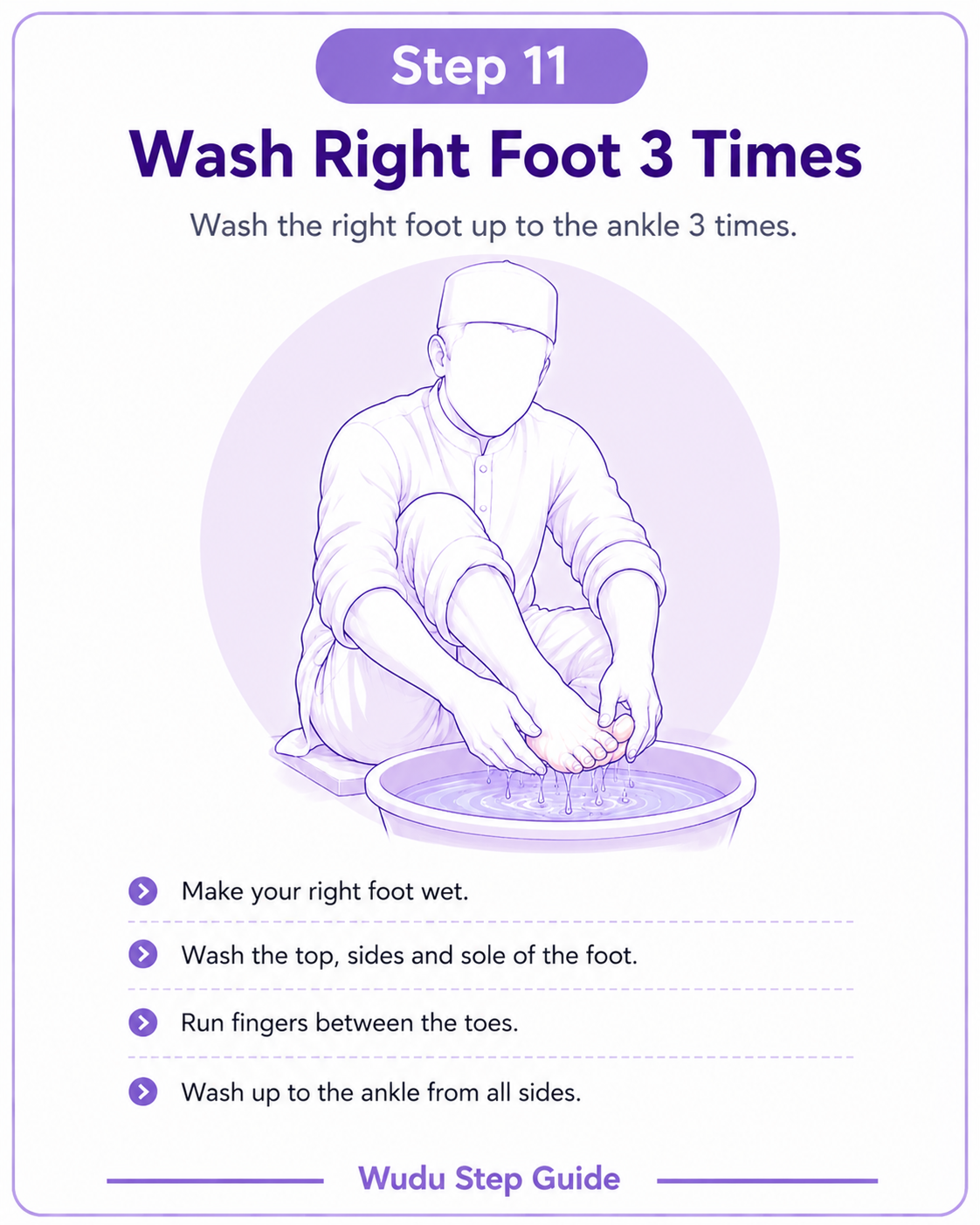
Step 11
Wash Right Foot 3 Times
Wash the right foot up to the ankle 3 times. Run fingers between the toes.
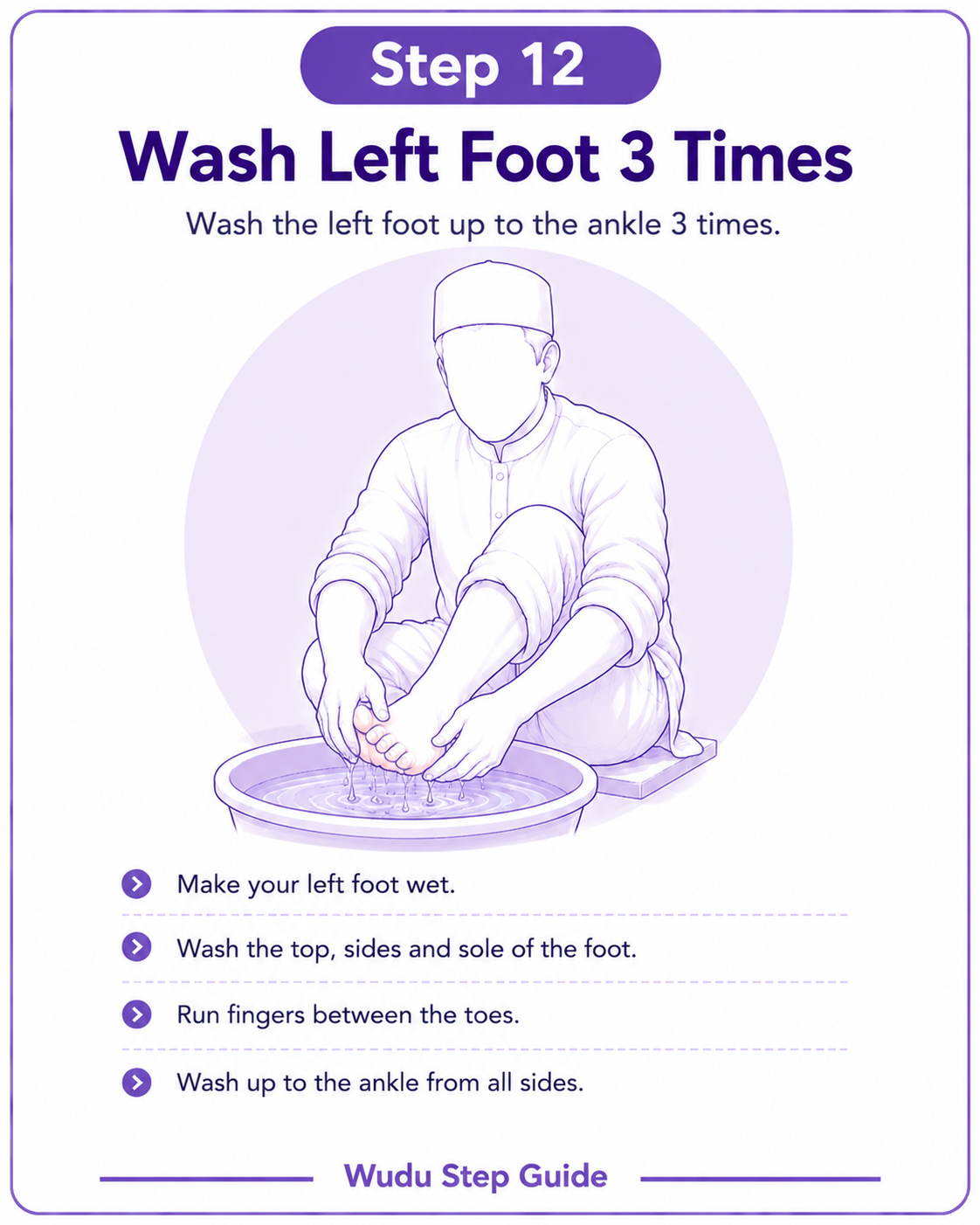
Step 12
Wash Left Foot 3 Times
Wash the left foot up to the ankle 3 times. Run fingers between the toes.
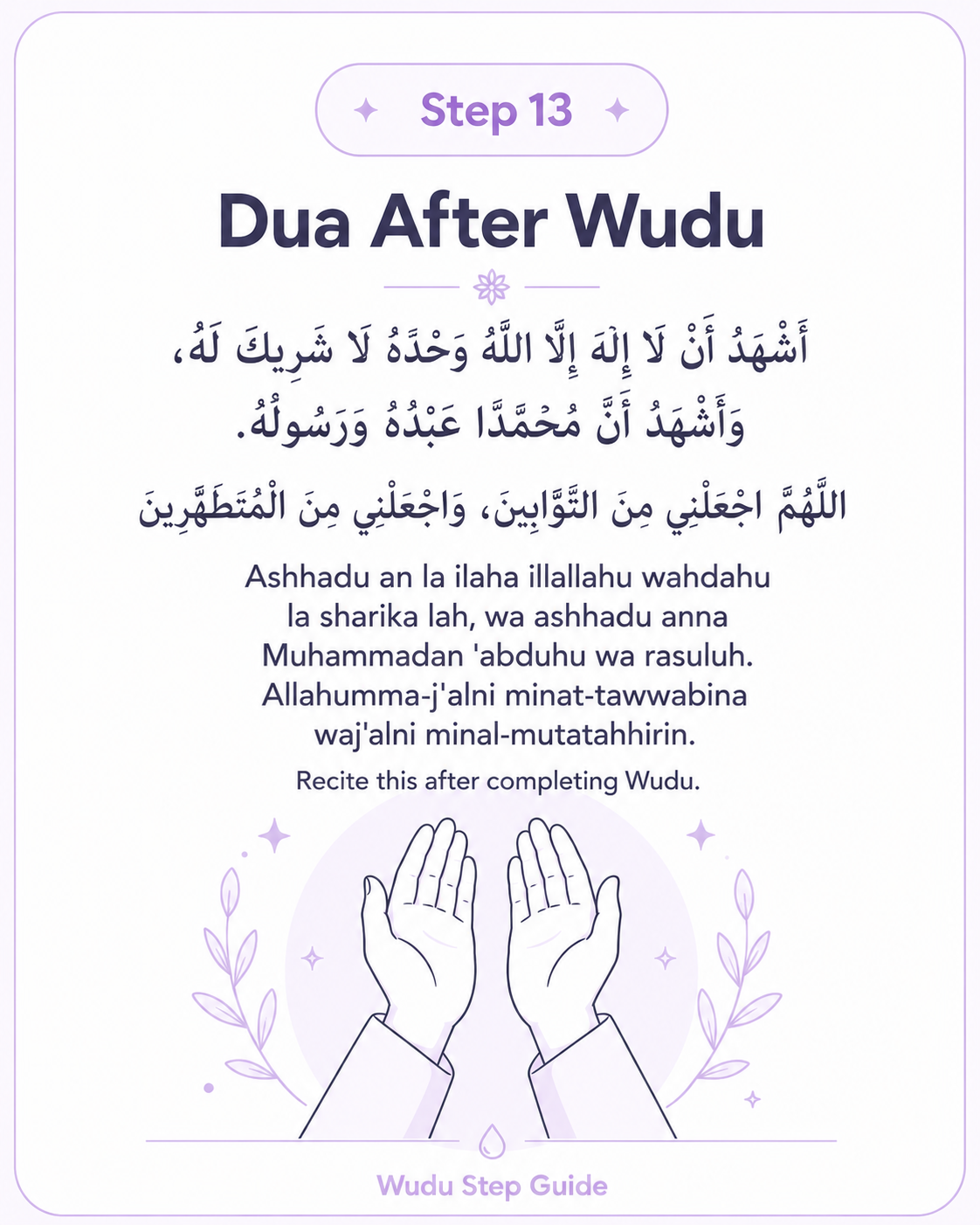
Step 13
Dua After Wudu
Recite the dua after completing Wudu.
What Breaks Wudu?
Wudu must be renewed if any of the following happens.
Using the toilet
Passing urine or stool breaks Wudu.
Passing wind
Passing wind breaks Wudu, even if there is no sound.
Deep sleep
Deep sleep while lying down, reclining, or sleeping in a way where control is lost breaks Wudu.
Losing consciousness
Fainting, becoming unconscious, or losing full control of the senses breaks Wudu.
Vomiting a mouthful
Vomiting a mouthful breaks Wudu.
Discharge from the private parts
Any discharge from the front or back private parts breaks Wudu.
Common Wudu Mistakes
These are simple mistakes many beginners make. Learning them helps make Wudu more careful and complete.
Washing too quickly
Do not rush through Wudu so fast that parts are missed.
Missing the elbows or ankles
When washing the arms, include the elbows. When washing the feet, include the ankles.
Not washing between fingers and toes properly
Let water pass between the fingers and run the fingers between the toes while washing the feet.
Wiping the head with dry hands
The head should be wiped with wet hands.
Using too much water
Wudu should be done properly, but water should not be wasted.
Doubting unnecessarily after finishing Wudu
Do not keep repeating Wudu because of unnecessary doubts. Complete it calmly and move forward.
Wudu in the Qur’an
The Qur’an directly mentions the main parts washed and wiped in Wudu before prayer.
Transliteration:
Ash-hadu an la ilaha illallahu wahdahu la sharika lah, wa ash-hadu anna Muhammadan abduhu wa rasuluh.
Allahumma-j‘alni minat-tawwabina, waj‘alni minal-mutatahhirin.
Meaning: I testify that none has the right to be worshipped except Allah alone, without partner, and I testify that Muhammad is His servant and Messenger. O Allah, make me among those who repent and make me among those who purify themselves.
Hadith: Sahih Muslim 234a; Jami‘ at-Tirmidhi 55
Virtues of Wudu
Wudu is not only physical washing. It is also a means of purification, reward, and protection.
Sins are washed away with Wudu.
When a believer washes the face, hands, and feet in Wudu, sins connected to those body parts are washed away until the person emerges purified.
Hadith: Sahih Muslim 244
The gates of Paradise are opened after Wudu and the dua.
The Prophet ﷺ taught that whoever completes Wudu well and then says the testimony, the eight gates of Paradise are opened for him.
Hadith: Sahih Muslim 234a
Rinsing the nose after sleep has special importance.
The Prophet ﷺ said that when a person wakes and makes Wudu, he should rinse the nose by putting water in it and blowing it out three times, because Shaytan stayed in the upper part of the nose during the night.
Hadith: Sahih al-Bukhari 3295
Wudu helps remove the knots of Shaytan after sleep.
The Prophet ﷺ said that Shaytan ties three knots at the back of a person’s head while sleeping. When the person wakes and remembers Allah, one knot is undone. When he performs Wudu, the second knot is undone. When he prays, the third knot is undone, and he begins the day active and in good spirits.
Hadith: Sahih al-Bukhari 1142; Sahih Muslim 776
Two rak‘at after Wudu bring great reward.
The Prophet ﷺ mentioned that a person who performs Wudu well and then prays two rak‘at with focus may have his past sins forgiven.
Hadith: Sahih al-Bukhari 159